
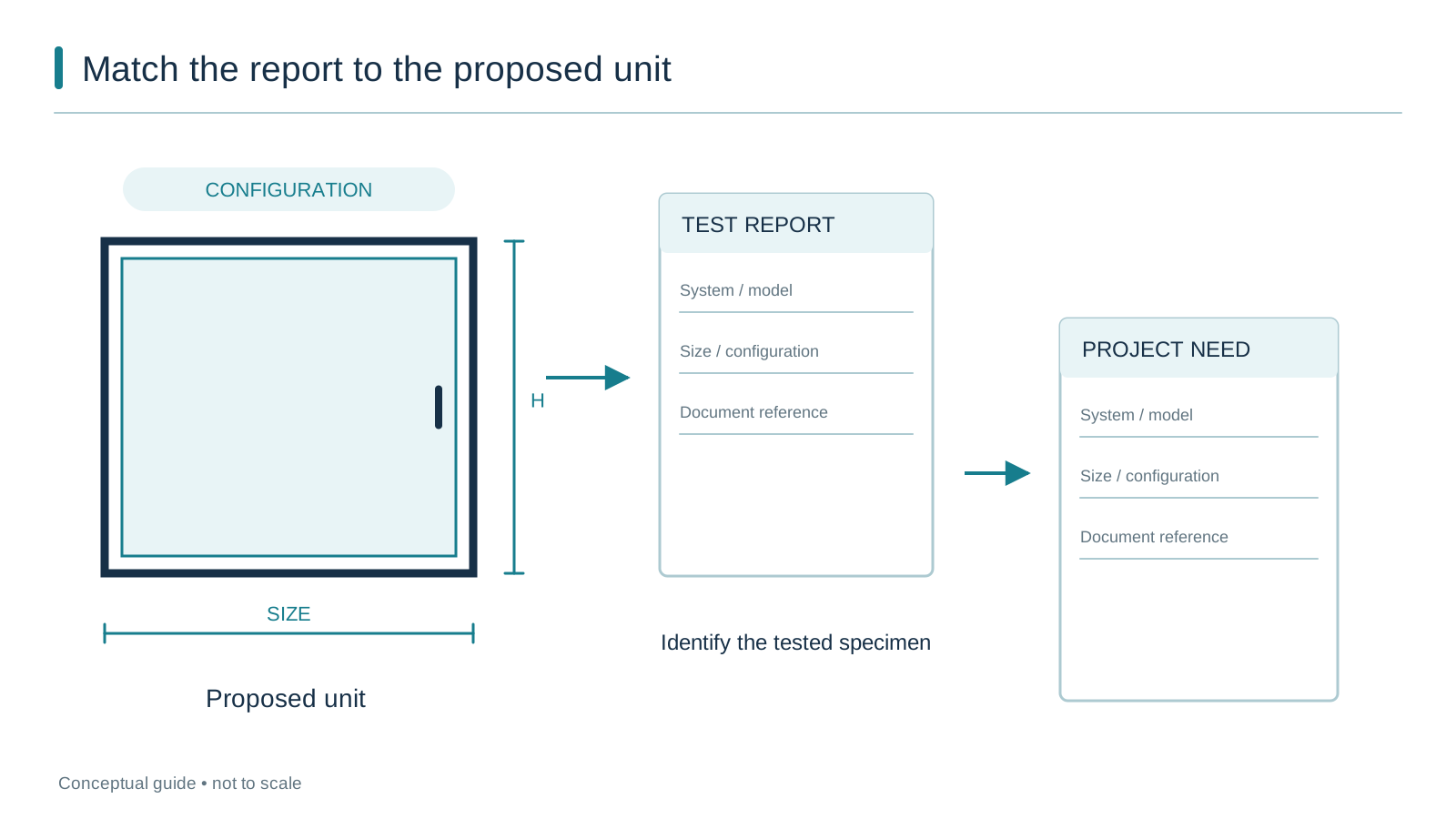
How to Compare Window Test Evidence Against Your Quoted Assembly
To verify an aluminium window quotation, buyers must check that the provided wind, water and air test reports map accurately to the physical dimensions, profiles and hardware of the actual system being offered.
Buyer decision boundary
Do not accept generic test certificates; verify that the physical details in the wind, water, and air test reports map logically to the hardware, profiles, and sizes listed in your itemized quotation.
Evidence to request or retain
- Site-specific SLS, ULS, and Water Penetration requirements from your local engineer.
- An itemized factory quotation detailing the frame series, hardware, and dimensions.
- Supporting test reports (e.g., GB/T 7106 or equivalent) showing the exact configuration tested.
Example input: Evidence Verification Checklist
- Project Opening Mark (e.g., W-01)
- Required SLS/ULS/Water (Pa)
- Quoted Frame Series & Hardware
- Test Report Reference Number
- Tested Dimensions vs Quoted Dimensions
- Local Certifier Review Status
What this guide does not confirm
This guide does not certify NCC compliance, confirm WERS eligibility, or act as local structural engineering approval.
Mapping Quote Variables to Test Evidence
| Project Variable | Evidence Requirement | Risk if Mismatched |
|---|---|---|
| Opening Dimensions | Evidence must cover the size range, product family, or include an accepted engineering assessment. | Excessive frame deflection (SLS failure) or glass breakage under wind load. |
| Hardware & Locks | Quoted hardware must mirror the locking points and seals used in the water and air tests. | Sash pulls away from weather seals, leading to water penetration during storms. |
| System Configuration | Test must reflect the exact operating type (e.g., sliding vs. fixed window). | Performance evidence may not cover the quoted configuration; confirm coverage through the relevant product family, size range, or accepted engineering assessment. |
Moving Beyond "Passed" Test Certificates
When sourcing custom aluminium windows and doors for a project, a generic test certificate is not enough to confirm suitability. A supplier may present a genuine test report, but if that document applies to a small fixed window and your project requires a three-metre-high bifold door, the structural physics will not align.
To buy confidently, you must separate your project input requirements from the physical evidence supplied. This means ensuring the tested assembly directly supports the exact frames, mullions, glass build-up, and hardware you are about to purchase, rather than just relying on a brochure that states a product range has been tested.
The Core Performance Metrics to Map
Your local structural engineer, designer, or builder is responsible for nominating the design wind pressures and site ratings. You must compare these local requirements against the supplier's test evidence in three primary areas:
1. Wind Load Resistance (SLS and ULS)
Wind pressure testing checks how a window behaves under physical load, categorized into two distinct limits:
- Serviceability Limit State (SLS): Structural testing measures deflection to verify the system meets serviceability requirements. It ensures the window frame flexes within allowable limits and continues to operate normally without permanent distortion.
- Ultimate Limit State (ULS): Ultimate strength testing confirms the window meets ULS requirements at specified test loads. Passing a nominated ULS test load does not identify the maximum pressure before the window physically fails; it simply demonstrates that the system withstood the specific target pressure requested for the test.
2. Water Penetration Resistance
Water testing measures the system's ability to keep driven rain out at a specified air pressure. As noted in the AGWA Guide to Window and Door Selection, the required test pressure in Pascals (Pa) scales with the site's wind rating and varies depending on whether the window location is exposed or protected.
3. Air Infiltration
Air leakage testing measures how much air passes through the closed window under pressure, which directly impacts acoustic performance and indoor comfort. For a detailed discussion on mapping thermal targets, U-values, and SHGC, refer to our Australian Window Schedule and WERS Review Guide.
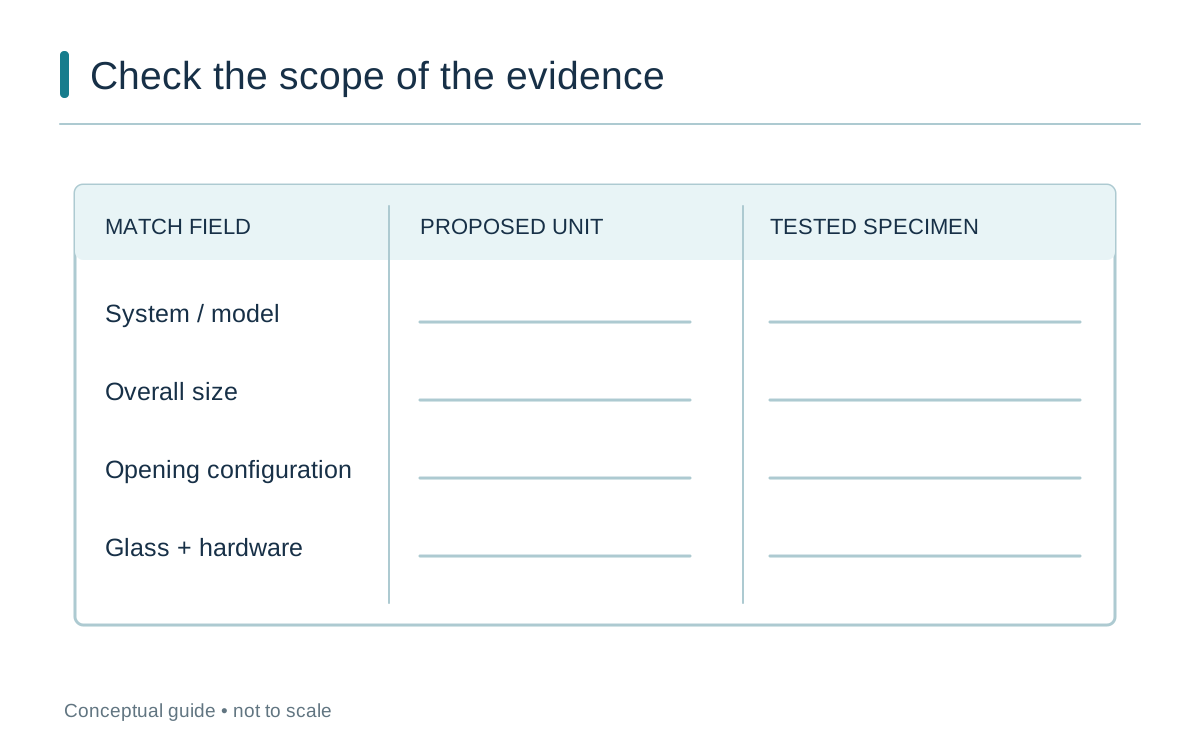
A blank comparison matrix aligns system, overall size, opening configuration, glass and hardware for proposed and tested units.
How to Spot Disconnects Between Evidence and Quotes
Once you have your site requirements in Pascals, you must ensure the tested product is technically relevant to the quoted product. Exact identical dimensions between the test report and the quote are not universally required. Evidence can cover documented product families, established size ranges, or accepted engineering assessments.
However, assuming a system is compliant simply because it was "tested larger" is insufficient. Pay attention to the following details:
- Size and Span Limits: The mullion spans and glass loads change dramatically as a window grows. If an opening exceeds the tested dimensions, ask the factory's engineering team how they calculate the required mullion stiffeners or thicker glass to maintain structural integrity.
- Configuration Disconnects: A fixed window easily achieves high water resistance. If your quote is for a sliding door, a fixed-window test report is irrelevant. The joints, seals, and threshold drainage dictate the performance.
- Hardware Disconnects: If a test report relied on a multi-point locking system to seal the sash tightly against the frame during the water test, but your quoted assembly uses a basic single-point latch to save cost, the physical evidence no longer applies.
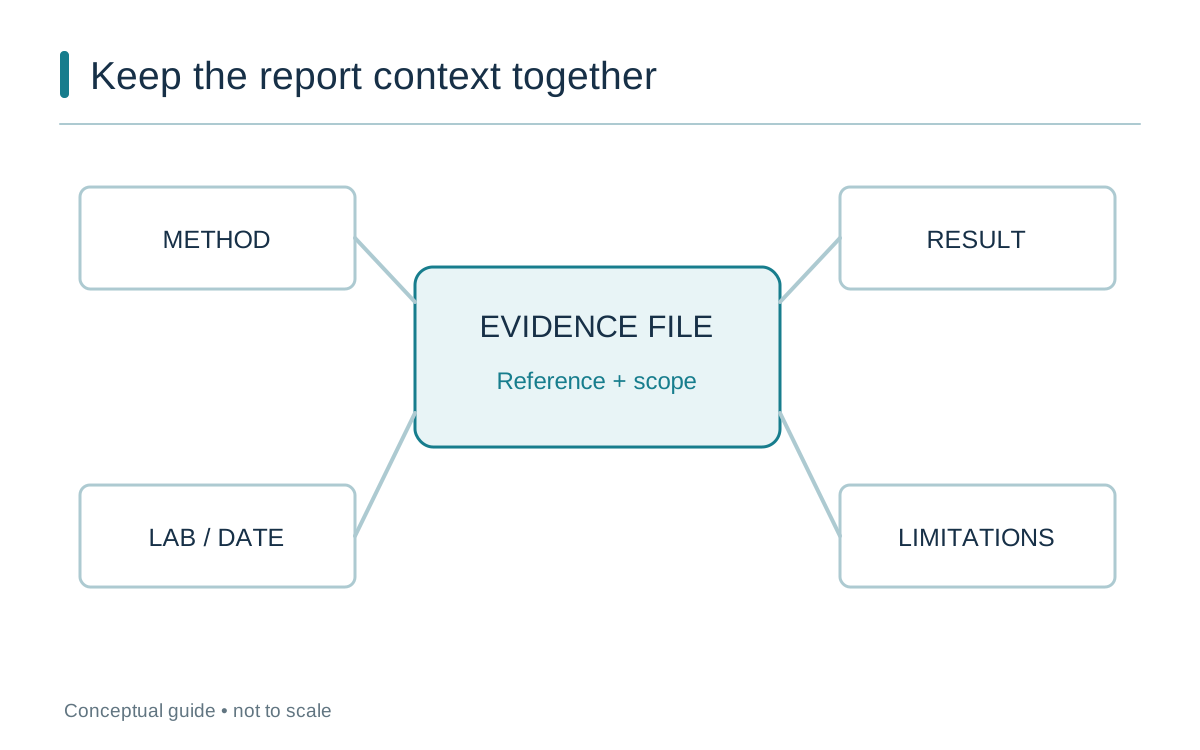
A central evidence file connects to the test method, result, laboratory and date, and limitations fields.
Evaluating International Test Standards
When dealing with a custom aluminium window factory in China, you may receive test reports conducted under Chinese national standards, such as GB/T 7106 (Test methods of air permeability, watertightness, wind load resistance performance for building external windows and doors). A GB/T report serves as useful supporting information regarding the physical capabilities of the window system.
However, do not assume that different international testing methods are standard or automatically equivalent worldwide. According to AGWA Verification guidelines, buyers should request and retain clear test reports to enable validation of compliance. You must ask your project professional or building certifier what specific Australian evidence is required for your site, with no presumption of equivalence or acceptance for overseas reports.
Frequently Asked Questions
How do I know if my window size is covered by a test report?
Ask the supplier if their evidence covers a documented size range or product family. If your window is larger or configured differently than the tested sample, your local engineer will need to review accepted engineering assessments or calculations to verify that the upgraded mullions and glass meet your project's SLS and ULS targets.
Do I need to check the hardware in the test report?
Yes. The hardware listed in the test report (such as locking points and weather seals) must match what is being quoted. A system that passes a water test with heavy-duty multi-point locks may fail in the real world if standard residential locks are substituted.
Next Steps for Your Project
Do not finalize a purchase based on a generic summary sheet. Gather your local engineering requirements and your marked-up window schedule. If you are quoting large panels, review the track and drainage details carefully alongside the test reports—you can read our Large Sliding Door Track & Drainage Guide for specific layout considerations.
Ready to check your exact assembly? Prepare your project specifications, architectural drawings, and engineering notes, and send them to the YULUX team for a detailed review at our project quotation page.
Let YULUX review your drawings before pricing.
Send us your window schedule, floor plans or photos. We review opening sizes, system direction, glass, hardware, finish and packing scope before quoting.