
Aluminum-Clad Wood Windows — Cost, Lifespan and Import Choices
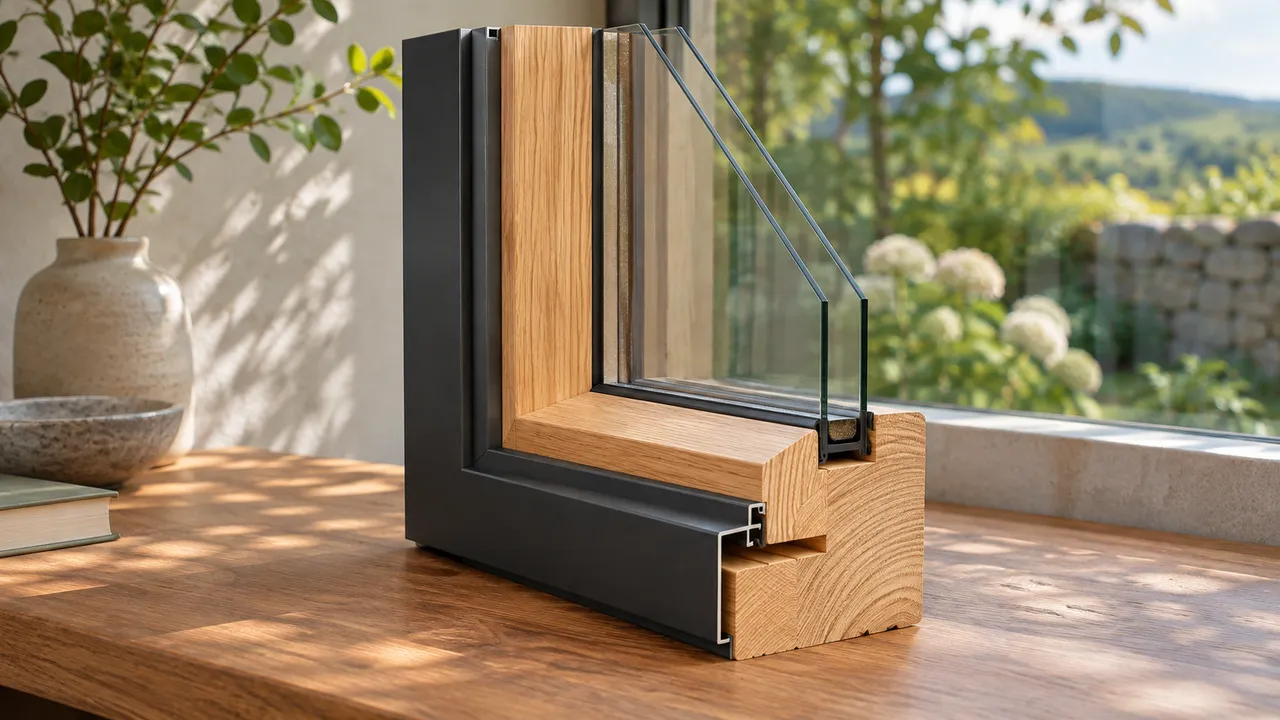
Aluminium-clad wood windows combine a structural timber frame and sash with exterior aluminium protection, retaining an insulating timber interior and reducing exterior maintenance. One published Chinese clad-timber product combines 68 mm timber depth with aluminium cladding walls at least 1.5 mm thick. The interior finish and drainage remain part of the care plan.
What is inside an aluminum-clad wood window?
Timber forms the frame and sash, with exterior metal shielding weather-facing surfaces. Pine, oak and larch offer different interior grain and staining choices. The metal covering can use extruded profiles or roll-formed sheet, while connection details accommodate movement between wood and aluminum.
A separate European aluclad catalogue lists 68, 78 and 92 mm timber sections, each with 20 mm cladding depth. Overall depth includes both the timber section and exterior covering. These are that catalogue’s section options.
Wood-look aluminum is an aluminum frame with a decorative grain finish. Clad-timber ranges include casement, awning, tilt-turn, hung, sliding and fixed windows, plus selected bay, bow and special-shape arrangements. New-build and replacement projects both use these options.
How can a room-by-room allowance be calculated from one seller’s prices?
In one European seller’s list for 36 × 60 inch operable windows, clad pine is $929 versus $779 for thermally broken aluminum, about 19% more. The same list puts meranti at $1,090 and oak at $1,363, approximately 40% and 75% above the aluminum example. Its pine option has double-pane glass.
The cited European seller’s US-facing product-price list was captured on 10 November 2026. Its effective price date, matched whole-window performance and installation charge are unspecified. The following allowance calculation uses only that seller’s published product figures.
Assumptions: 20 identical openings at the seller’s published product prices, including 6 feature-room upgrades, with price date unspecified, performance unmatched and delivery, import charges and installation excluded.
Selecting pine for 6 openings adds $900 to the aluminum allowance, compared with $3,000 for all 20 openings.
| Allocation | Extra product-price calculation | Added allowance |
|---|---|---|
| Pine throughout | 20 × ($929 − $779) | $3,000 |
| Oak throughout | 20 × ($1,363 − $779) | $11,680 |
| Pine in 6 feature openings | 6 × ($929 − $779) | $900 |
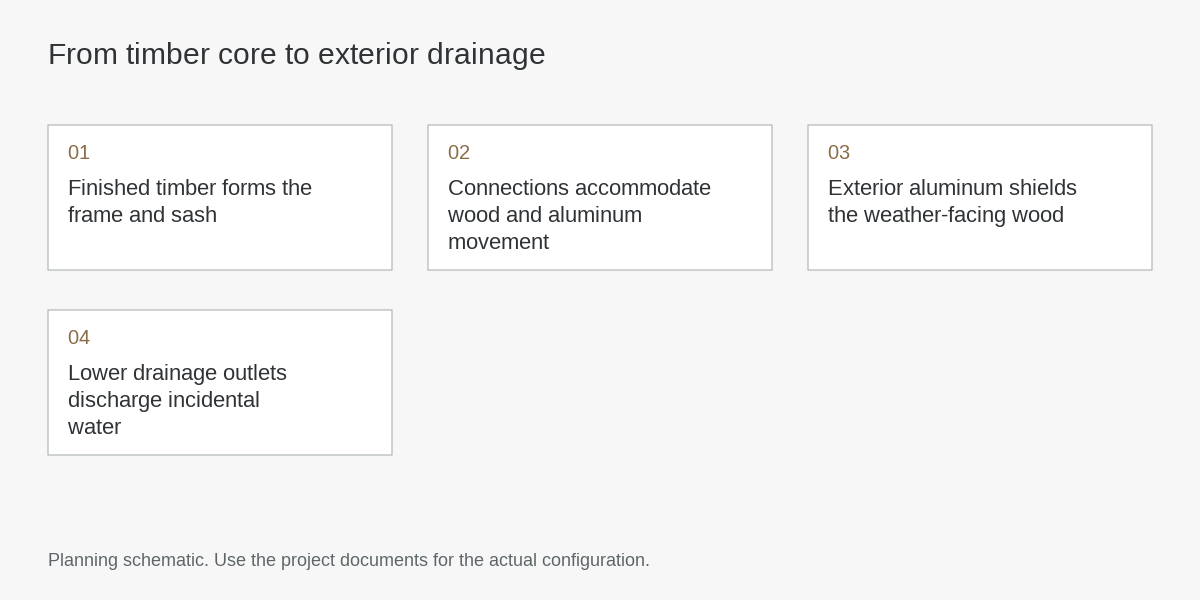
A clad-timber section separates structural members, cladding and the water outlet.
How long do clad-wood windows last compared with fiberglass and vinyl?
Clear drainage and accessible seals, glazing and hardware allow continued repair of clad-wood windows. Persistent dampness at timber corners needs treatment before finish damage spreads. Read warranty coverage for parts, labour and exclusions alongside the maintenance schedule. FGIA care guidance
Fiberglass offers strength, insulation and relatively little frame maintenance. uPVC (vinyl in North America) also offers insulation and low-maintenance surfaces, with hollow or foam-filled frame sections. These are frame-material properties described in EPA’s ENERGY STAR guidance. Clad wood combines insulating timber with exterior protection, while the interior wood finish remains part of the care plan.
AGWA recommends hardware maintenance every 6 months in most environments and every 3 months in marine or industrial environments. The association’s installation guide supports the maintenance schedule. Keep outlets clear and service moving parts with compatible products. Interior refinishing follows coating condition and the finish supplier’s instructions.
For rental housing or a hotel, include cleaning access and local replacement-part availability in the operating budget. The broader frame comparison is covered in our aluminum-versus-uPVC guide.
How do timber joints and moisture affect a Chinese order?
Finger-jointed pieces are joined along their length, while laminated timber combines bonded layers. In Shandong’s regional exterior-window renovation guidance, clause 3.1.3 references GB/T 21140 class 1 finger-jointed timber and LY/T 1787 laminated timber. Visible strips, excluding end pieces, exceed 250 mm (9.84 inches), and adjacent laminated layers have staggered joints.
For Shandong exterior-window renovation, JD 37-003-2025 specifies timber moisture of at least 8% and at most (X + 1)%, where X is local annual average equilibrium wood moisture content. This is a regional material requirement. Put the agreed factory-release moisture target, measurement method and readings on the inspection sheet before packing.
USDA research supports the 20% wood-moisture-content rule for managing above-ground decay risk. Wetting duration and temperature also matter. Exterior cladding reduces direct wetting, while functioning joints and drainage allow incidental water to leave the assembly.
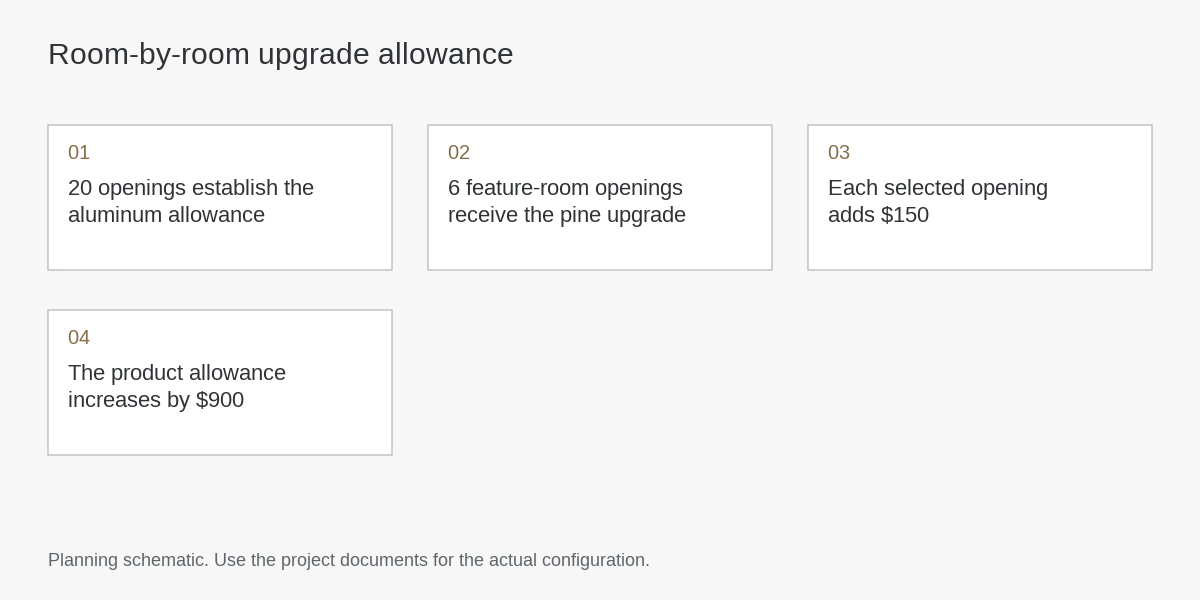
Assumed 6-opening upgrade using one seller’s 36 × 60 inch operable pine and aluminium product prices, excluding delivery, import charges and installation.
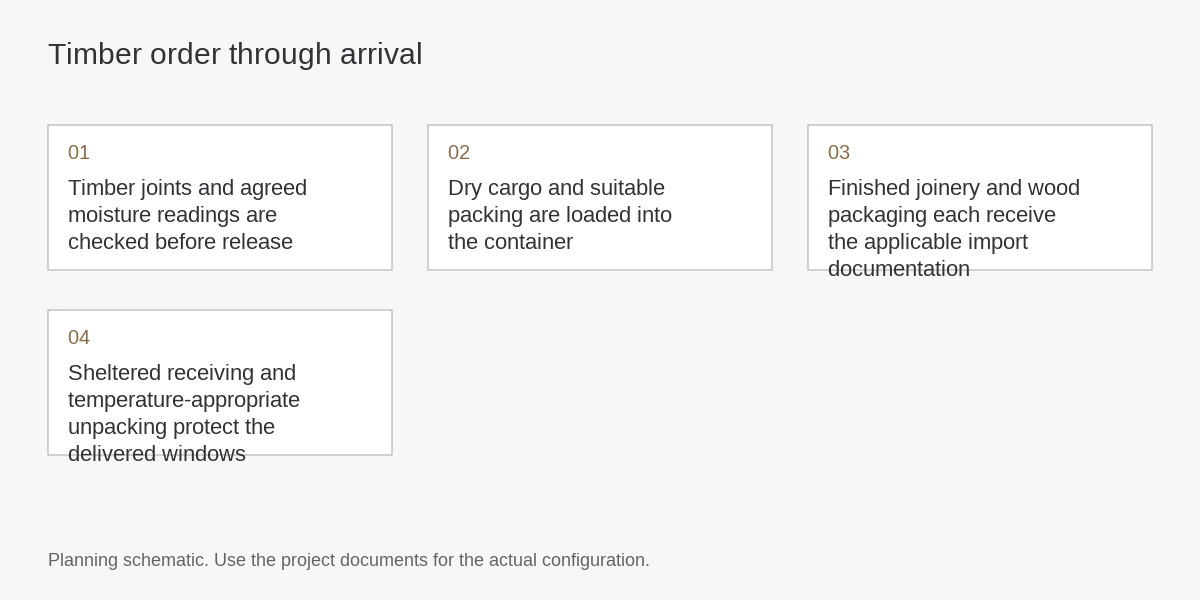
Moisture control and import documentation follow the joinery through transport.
How should wood windows be protected during sea freight?
The CTU Code defines container-dry cargo by equilibrium with about 60% relative humidity inside the container. The cargo-packing code requires sufficiently dry timber and moisture-absorbing packing before loading. Desiccants have limited capacity and can fail when wet cargo keeps releasing water.
For sensitive cargo, the code describes a fleece cover against falling condensation. Arrival handling also follows the temperature change. Cold cargo arriving in warm, humid air needs time to warm sufficiently before exposure, while hygroscopic cargo arriving in cold conditions needs prompt unpacking and ventilation to manage container condensation. Plan sheltered receiving space alongside the delivery date.
What do Australia and New Zealand require for finished timber windows?
Australia’s timber import guidance routes finished wooden articles containing solid timber through the BICON Timber and timber products case. Its guidance includes finished combinations of wood with glass or metal. The importer must establish the applicable conditions for the actual timber components, processing and origin, including any required treatment and documentation.
New Zealand’s MPI wood-product import steps direct importers to applicable import health standards, including the Woodware standard and standards for particular product types. Finished timber window and door components need that product assessment, including applicable treatment, certification and arrival inspection.
ISPM 15 covers wood packaging such as crates and dunnage. Keep the finished joinery’s product assessment and its packaging requirements as separate entries in the shipping file.
Which performance details belong in the owner’s specification?
Compare whole-window U-factor for heat transfer and SHGC for solar gain at equivalent sizes and opening arrangements. Double or triple glazing, edges and frame construction all contribute to the finished assembly. Carry those performance targets into the window schedule alongside species, interior finish, exterior color and operating type.
Within US federal projects using UFGS, section 08 52 00 directs designers away from wood windows in listed humid zones and severity classes C3–C5, while section 08 51 13 specifies aluminum windows for those exposures.
FAQ
Are aluminum-clad wood windows worth the extra cost?
They suit owners who value genuine interior timber and can maintain its finish. In the published pine example, selecting 6 feature openings adds $900 to the aluminum product allowance.
Can timber rot behind aluminum cladding?
Yes. Persistent moisture can reach the timber through joints or the wall connection. Clear drainage, sound seals and timely repair support drying and limit decay risk.
Do fiberglass or vinyl windows need less wood care?
Fiberglass and vinyl frames have low-maintenance surfaces. Clad-wood windows retain a timber interior that needs care appropriate to its coating and exposure.
Let YULUX review your drawings before pricing.
Send us your window schedule, floor plans or photos. We review opening sizes, system direction, glass, hardware, finish and packing scope before quoting.