
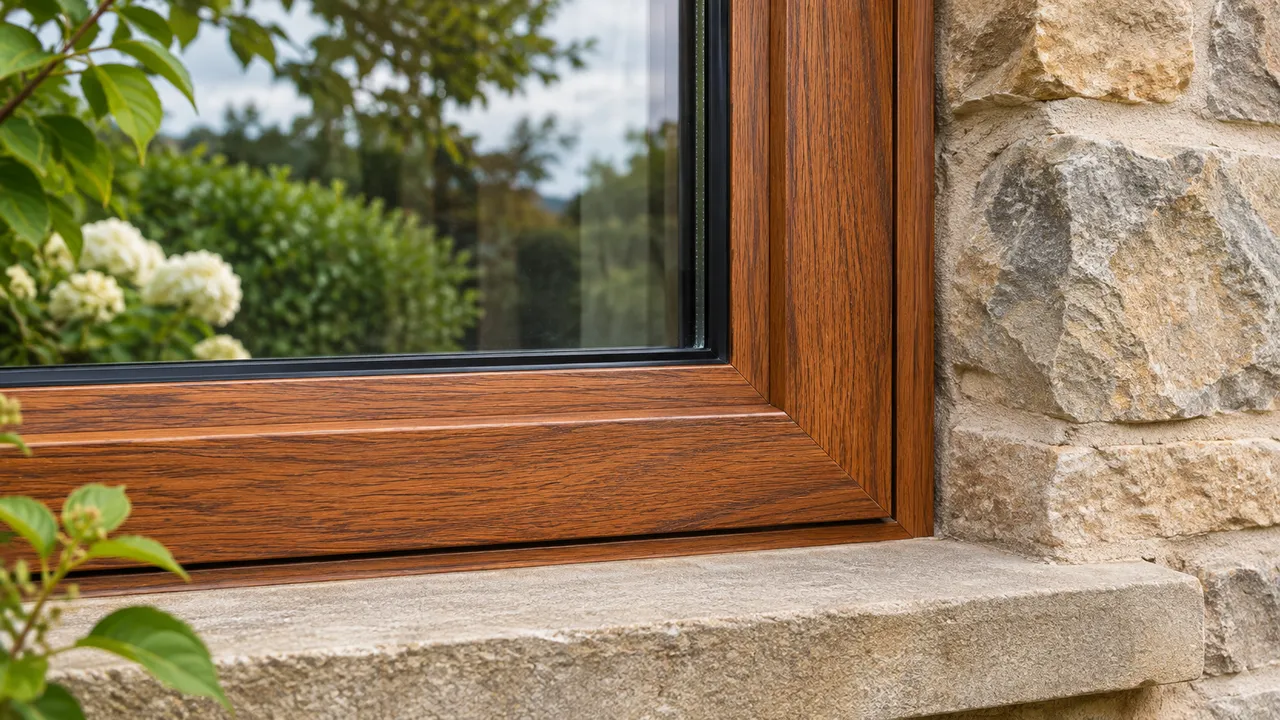
Wood Grain Aluminum Windows: Choose the Finish
Wood grain aluminum windows are standard extruded aluminium frames finished with a decorative coating that replicates timber colour and grain. You pick them when the architecture demands a timber look, but the budget, span, or climate calls for an all-aluminium system.
The details behind the answer
Once you make that call, your real work is locking down the exact coating process and signing off on how the assembled window actually looks—especially at the corners and inside the open sash—before the factory starts extruding.
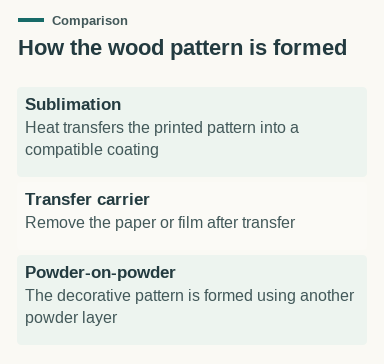
Sublimation vs. Powder-on-Powder: Which coating route are you buying?
QUALIDECO (the international quality label for decorative coated aluminium) covers two main wood-effect routes: sublimation and powder-on-powder. If a Chinese factory quote just says "wood grain" or "wood film," stop and ask what they actually mean.
| Finish route | How the pattern is made | What the buyer should select |
|---|---|---|
| Sublimation | Pattern transferred from paper or film into a compatible base coating | The powder-and-transfer combination, grain and visible-face coverage |
| Powder-on-powder | A decorative powder topcoat works with a powder basecoat | The base/topcoat combination and approved appearance |
In sublimation, the factory sprays a base powder coat, wraps the profile in a printed paper or film carrier, and bakes it—typically at 170–200°C (338–392°F)—so the ink migrates into the coating. Then they peel the film off. Nothing stays glued to the surface. Powder-on-powder achieves the timber look and texture by applying a decorative powder topcoat directly over a basecoat. Both routes fall under the 2026 QUALIDECO specification for architectural aluminium.
Here is where buyers get burned: a quotation says "wood film" and you assume it's baked-in sublimation, while the workshop plans to use a glue-on PVC foil, or vice versa. Settle whether "film" means a removable transfer carrier or a permanently bonded laminate before you even look at colour swatches. When you write the order, don't just write "oak" or "walnut." Specify the exact basecoat powder and transfer film combination. If you're still weighing plain coatings against anodising, check the aluminium finish comparison first.
How do you approve grain direction and open-sash faces?
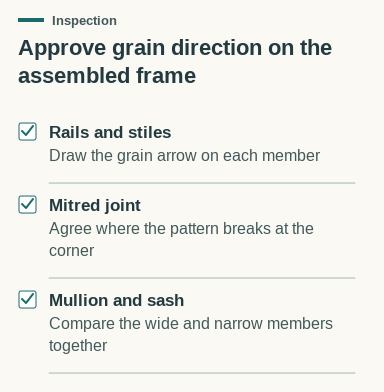
Approve a physical corner sample and an opening sash in two positions—closed and wide open—alongside a marked-up elevation drawing.
A flat 10cm swatch of extrusion tells you nothing about how a full window will look. Extrusions are coated in 6-metre lengths, so the grain always runs lengthwise along the bar. When the factory cuts those bars at 45-degree mitres to crimp a corner, the grain crashes together at a right angle. And when you open a casement sash, you suddenly see the inner rebate of the outer frame. If the factory only masked and wood-grained the main faces, you'll be staring at raw basecoat or a mismatched plain colour every time you let fresh air in.
Take a typical scenario: an outward-opening casement with woodgrain specified on both the room-side and weather-side faces, using standard lengthwise grain on each profile. Your shop drawing and sample sign-off need to map out four things:
| Location on the sample | Design choice to settle | What belongs on the drawing |
|---|---|---|
| Rails and stiles | Lengthwise grain or another agreed direction | Arrows on each member |
| Frame-to-sash corners | Accepted pattern break and shade relationship | A referenced assembled corner |
| Reveals visible with sash open | Woodgrain or an intentional contrasting finish | Face labels in the open-sash view |
| Beads, mullions and trims | Match the grain, or select a plain colour beside the approved frame sample | Separate finish entries for these parts |
Don't skip the small trim pieces. Glazing beads, wide structural mullions, corner couplers, and clip-on trims often get run in a different batch—or the factory assumes they can use a plain brown or black powder coat to save money. Decide upfront if beads and trims get the woodgrain or a deliberate contrasting plain colour, and match your hardware colour in the same view. Check the physical assembly outdoors in natural daylight next to your brick, stone, or interior floorboards. Lock down the gloss level and texture, keep half of the signed sample in your office, and follow the sample approval guide before releasing production.
How the wood pattern is formed
What do QUALIDECO Class 1 and Class 2 weather tests actually prove?
QUALIDECO 2026 requires 1,000 hours of accelerated weathering and 1 year of Florida sun exposure for Class 1, and 2,000 hours plus 3 years in Florida (evaluated annually) for Class 2.
That rulebook took effect on 1 January 2026. If your project faces fierce UV—say, a north-facing elevation in Australia or a desert build in the US— cheap transfer ink on a standard polyester basecoat will chalk or fade to a weird pink or grey within a couple of summers. Demanding a certified Class 2 combination (usually built on super-durable or fluoropolymer powders) filters out the bargain-basement decorators right away.
Just remember two things before you sign the contract:
- Test periods aren't warranties. A 3-year Florida test proves UV stability of the pigment and resin; it isn't a 3-year lifespan, nor does it automatically give you a 15-year commercial warranty unless you write that into the purchase order.
- UV resistance isn't corrosion protection. Your wood pattern can look fresh while coastal salt eats away at an untreated cut edge or a poorly pre-treated frame. For coastal or exposed elevations, pair your QUALIDECO decoration class with a strict metal pretreatment and corrosion spec.
Does woodgrain change thermal ratings, maintenance, or frame material?
No—a timber print has zero effect on window insulation, requires gentle pH-neutral washing with careful scratch management, and is still 100% metal underneath.
Thermal performance: Buyers sometimes subconsciously link "wood look" with warmth. In reality, your U-value comes strictly from the polyamide thermal break strips, frame geometry, glass unit, and warm-edge spacers. As the Australian government’s glazing guidance points out, whole-window U-value is the combined result of glass and frame. Lock in your glass package and frame series using the thermal specification first. For Australian builds, tie your window schedule directly to WERS or NatHERS targets via the Australia project guide; US buyers need NFRC whole-window numbers.
Maintenance and touch-ups: Standard architectural powder-coating rules apply—wash down with clean water and a mild, pH-neutral detergent, and wash more often near the ocean. The hidden trap with woodgrain is site damage. When a bricklayer scratches a plain black frame, a dab of touch-up paint hides it from two metres away. When you scratch woodgrain, a plain brown touch-up pen leaves an obvious solid blotch across the grain lines. Test the supplier's repair kit on an offcut before accepting it. For deep gouges on eye-level sashes, swapping out the glazing bead or sash bar is usually the only clean fix, so make sure your handover pack includes the exact transfer code and spare bead profiles.
Real wood vs. aluminium: If your client actually wants to touch warm timber on the inside of the room, woodgrain aluminium won't fool them up close. You want alu-clad timber instead—a real timber frame with an exterior aluminium shell. That's a completely different structure, price point, and lead time; see the aluminium-clad wood guide if that's the brief.
Approve grain direction on the assembled frame
How should you specify and price woodgrain for your building type?
Run two identical window schedules—one in standard plain powder coat, one in your exact woodgrain spec—to see the real finish premium without factories hiding extra margin in the glass or hardware.
How you set up that specification depends on what you're building:
- Private villas: Your biggest risk is clashing with interior joinery. Take an open-sash sample to the site, hold it against the timber floors and doors, and specify whether you want woodgrain on both sides or woodgrain outside with a crisp matte plain colour inside.
- Apartment developments: Consistency and easy turnarounds win. Keep the grain pattern simple, lock in batch-to-batch shade tolerances in the contract, and order extra pre-finished glazing beads and sash bars so site teams can swap damaged parts before handover without waiting eight weeks for a custom transfer run.
- Exposed commercial facades: Put weathering class and maintenance access first. Specify a tested Class 2 powder-and-film system, tie it to your building's facade cleaning schedule, and clarify warranty terms for high-UV elevations before paying a deposit.
To keep quotes honest, hold every other variable constant: opening sizes, profile wall thickness, thermal break width, glass buildup, hardware brand, and shipping terms. In the finish column, spell out the coating route (sublimation or powder-on-powder), pattern code, gloss level, QUALIDECO class, and exact face coverage (exterior only vs. both sides). Get an itemised breakdown of custom sample fees, extra lead time for sending bars out to the transfer line, and minimum batch charges.
Pick your frame layout in the casement window range, then price my woodgrain finish against the same window in plain colour. Send over your window schedule, project postcode, and target timber shade so we can quote both options side-by-side on the exact same system.
FAQ
Does sublimation leave a plastic film on the window?
No. During sublimation, the printed carrier film is baked at 170–200°C (338–392°F) so the ink absorbs into the powder basecoat, and the film is peeled right off before packing. If there is a plastic layer left on the metal, that's a laminated foil, not sublimation.
Does Class 2 mean a woodgrain finish lasts only three years?
No, 3 years is the length of the outdoor Florida sun test required to pass QUALIDECO 2026 Class 2 (alongside 2,000 hours of lab weathering). Actual service life on your building is much longer, though your legal warranty still depends on the specific powder system, coastal distance, and contract terms you sign.
How can I find the extra cost of woodgrain windows?
Ask for a split quote on your exact window schedule: Price A in standard RAL powder coat, and Price B in your chosen woodgrain (specifying whether it's one-sided or both-sided), keeping the aluminium series, glass, and hardware identical. That strips out guesswork and shows you the exact dollar upgrade per square metre.
Let YULUX review your drawings before pricing.
Send us your window schedule, floor plans or photos. We review opening sizes, system direction, glass, hardware, finish and packing scope before quoting.