
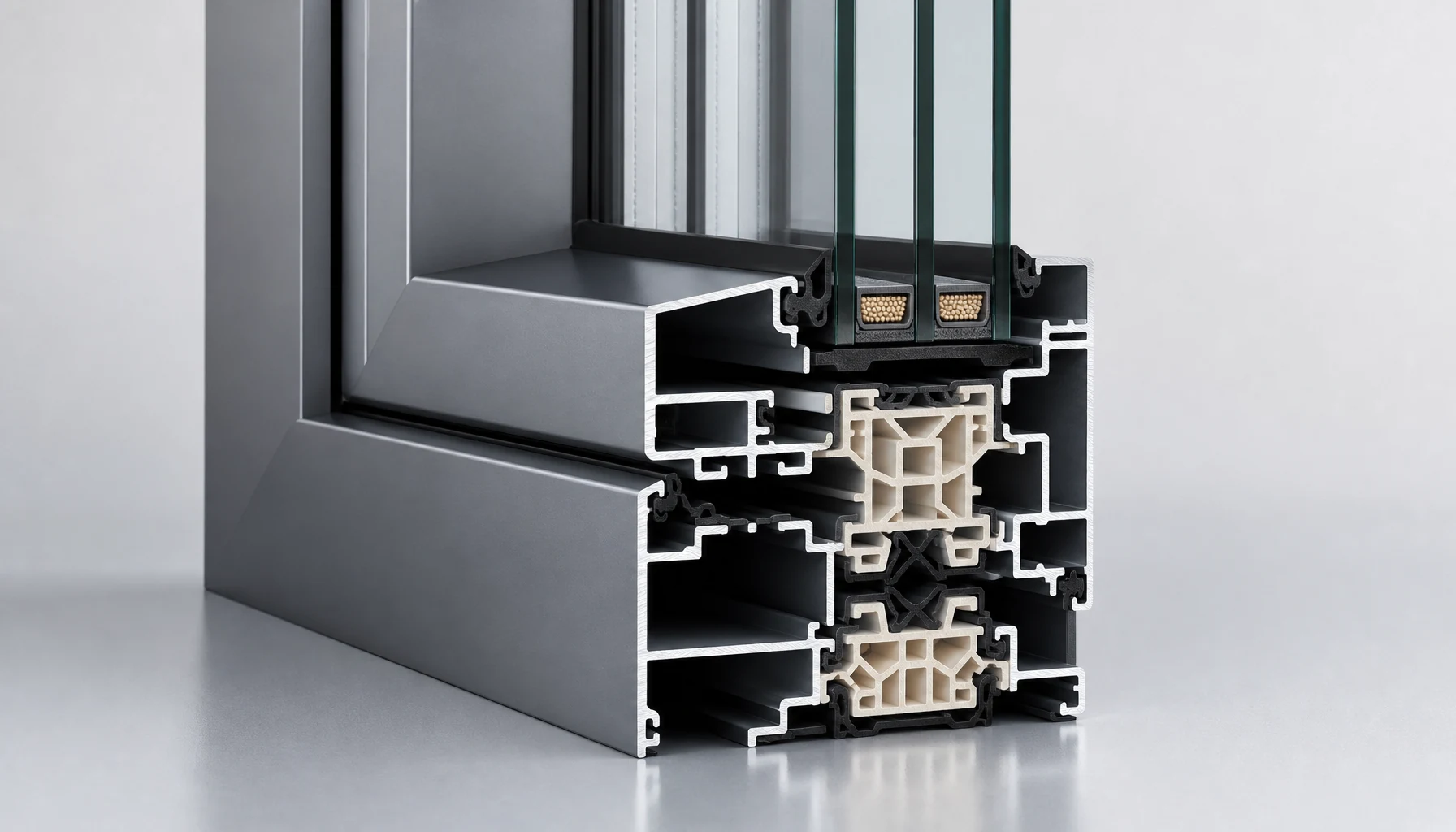
What is a thermal break in aluminium windows, how does it work, and when should a project use it?
A thermal break is a low-conductivity insulating section placed between the inside and outside aluminium paths of a window frame. It reduces heat transfer through the frame, but it does not make a completed window immune to heat flow or guarantee that condensation will not occur. A project can compare thermal-break and non-thermal frames against its climate, comfort objective, whole-window target and budget. The comparison should include the exact frame system, glass build-up, spacer, gaskets, sash size, air leakage and installation, then state whether any value is whole-window or glass-only and identify its basis and source. Local project professionals still need to review the final configuration and any required approval path.
Buyer decision boundary
Do not select a frame from one catalogue claim or glass option; whole-window targets and energy review require local review of the complete assembly.
Evidence to request or retain
- Whole-window or glass-only basis.
- Frame system and glass build-up.
- Glass layers and coating notes.
- Quote separating confirmed items from upgrades.
Example input: Thermal comparison fields
- Location
- Target
- Frame
- Glass build-up
- Value source
- Reviewer
What this guide does not confirm
Does not certify U-value, energy use, condensation or local compliance.
Questions that influence the frame direction
| Project signal | Non-thermal may be considered | Thermal-break deserves review |
|---|---|---|
| Climate and conditioning | Mild exposure or limited conditioning | High heating/cooling demand or comfort target |
| Glazing target | Basic project-defined glass | Lower whole-window U-value target |
| Opening scale | Smaller standard openings | Large glazed areas or sensitive interiors |
How does a thermal break separate heat paths in an aluminium frame?
In a non-thermal aluminium frame, the metal can form a continuous path from the exterior to the interior. A thermal-break frame places a low-conductivity insulating section between the inside and outside aluminium paths, reducing heat transfer through that part of the frame. It changes the frame construction; it does not stop all heat flow through a completed window.
That distinction matters for comfort and frame heat transfer discussions. A thermal break does not promise to eliminate condensation. Glass, air leakage, interior humidity, site exposure and installation all affect the finished opening. The useful question is whether the exact frame system and complete window configuration fit the project conditions.
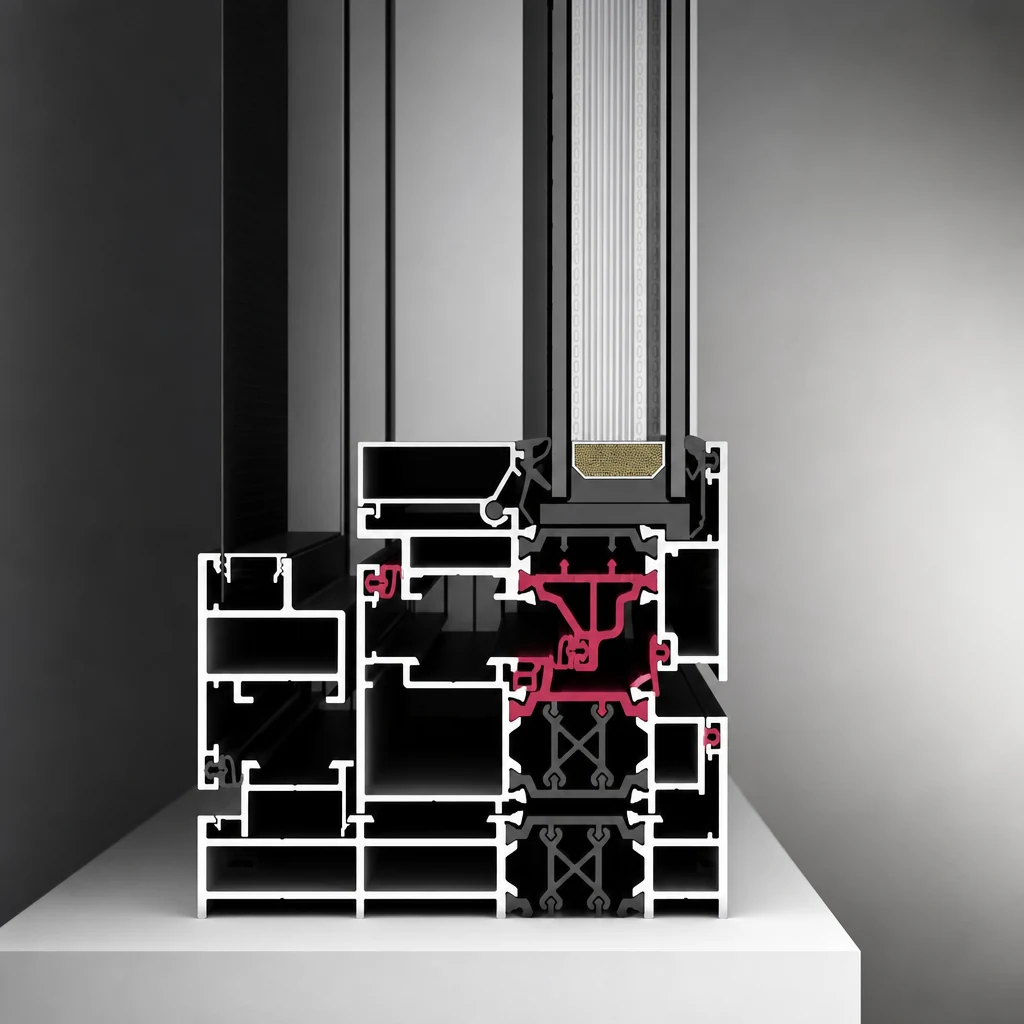
Thermal performance comes from the complete frame, glass and sealing build-up, not one material name.
When should a project compare thermal-break and non-thermal frames?
Thermal-break frames deserve comparison where the project has demanding heating or cooling use, a comfort objective, larger exposed glazing, or a lower whole-window performance target to assess. They may add material and system complexity, so the benefit should be considered with the intended use, location and available budget rather than assumed from the label alone.
Non-thermal aluminium can still be a reasonable direction for mild conditions, limited conditioning, interior-facing openings or projects where the agreed performance basis does not call for additional frame insulation. Neither choice establishes local compliance or certification by itself. A protected internal opening and a large exterior opening with strong sun or wind exposure should be treated as different conditions.
Why must a whole-window comparison include more than the glass or frame?
A whole-window comparison includes the frame system, glass build-up, spacer, gaskets, sash size, air leakage path and installation detail. Opening type and hardware can also affect how consistently the sash closes against its seals. A thermal-break frame paired with a different glass build-up, oversized sash or weak sealing is not the same window as the option it is being compared with.
Ask whether a stated value is for the whole window or for glass only. A glass-only figure cannot be used as the result for the full frame-and-glass assembly. Whole-window values also need their stated configuration, size, test or calculation basis and source; they should not be treated as a promise of installed project performance.
Same glass, different frames: is the thermal break worth the extra cost?
Double glazing describes the glass unit; a thermal break describes the frame construction. You can have double glazing in either a thermally broken or a non-thermally broken aluminium frame. Keeping the same glass specification makes a frame comparison easier, but it does not make the two complete windows perform identically.
Ask for two quotations using the same window schedule. Keep opening size, opening type, glass build-up, finish, hardware and supply scope consistent wherever possible. Where the proposed systems require a difference, have the supplier list it explicitly. Then compare the following fields:
| Comparison field | Option A | Option B |
|---|---|---|
| Exact frame system and opening reference | Record the proposed system | Record the proposed system |
| Glass build-up and quoted size | Record the configuration | Confirm whether it is identical |
| Whole-window U-value and its source | Attach the applicable evidence | Attach the applicable evidence |
| SHGC and configuration covered | Record value and scope | Record value and scope |
| Differences in hardware, seals or supply scope | List included and excluded items | List included and excluded items |
| Price for the same quantity and scope | Record the quotation | Identify the price difference |
A frame label alone does not establish the benefit for your building. Use the comparable whole-window evidence and the project’s energy assessment to decide whether the proposed difference meets your target and justifies the quoted price. If either quotation has no matching performance evidence, leave the result unconfirmed rather than estimating an energy saving or payback period.
For an Australian project, send the location, window orientation, shading and any whole-window targets supplied by your project assessor. Read our U-value and SHGC guide for the terms, then use the supplier quotation comparison guide to prepare the two options. Ask YULUX to identify the proposed frame-and-glass configuration and which supporting documents are available for review.
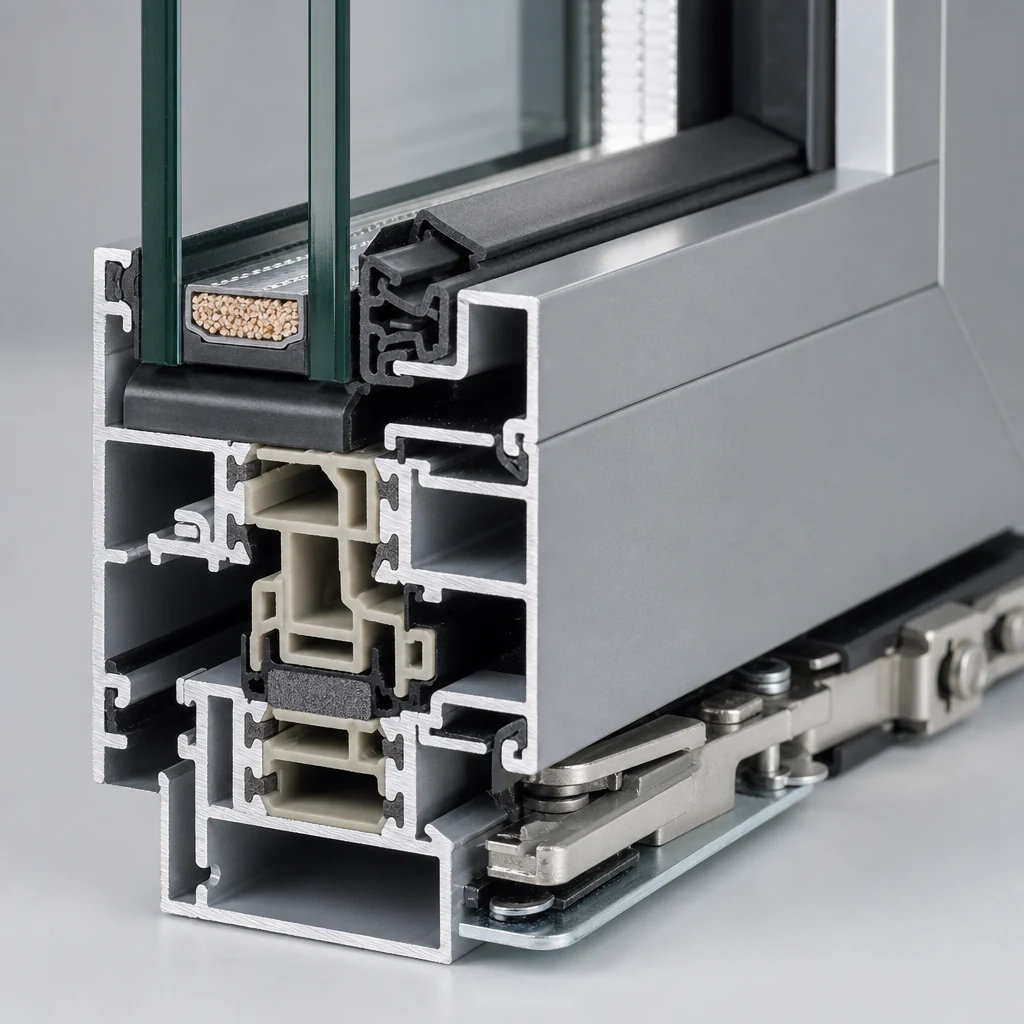
Review gaskets, corner joints and sash compression alongside the frame and glazing configuration.
Which details make thermal and non-thermal quotations comparable?
For a like-for-like comparison, send the exact frame system requested, the glass build-up, and any target value with its basis and source. Add opening sizes and types, proposed seals and hardware, project location and exposure, plus any available drawings or schedule. State whether an alternative is acceptable and list exclusions such as screens, finish, packing, site installation or local engineering review.
This gives the supplier a defined basis for thermal-break and non-thermal options instead of a generic performance claim. The resulting drawings, configuration notes and quotation can then be reviewed by the relevant local project professionals; they do not replace that review.
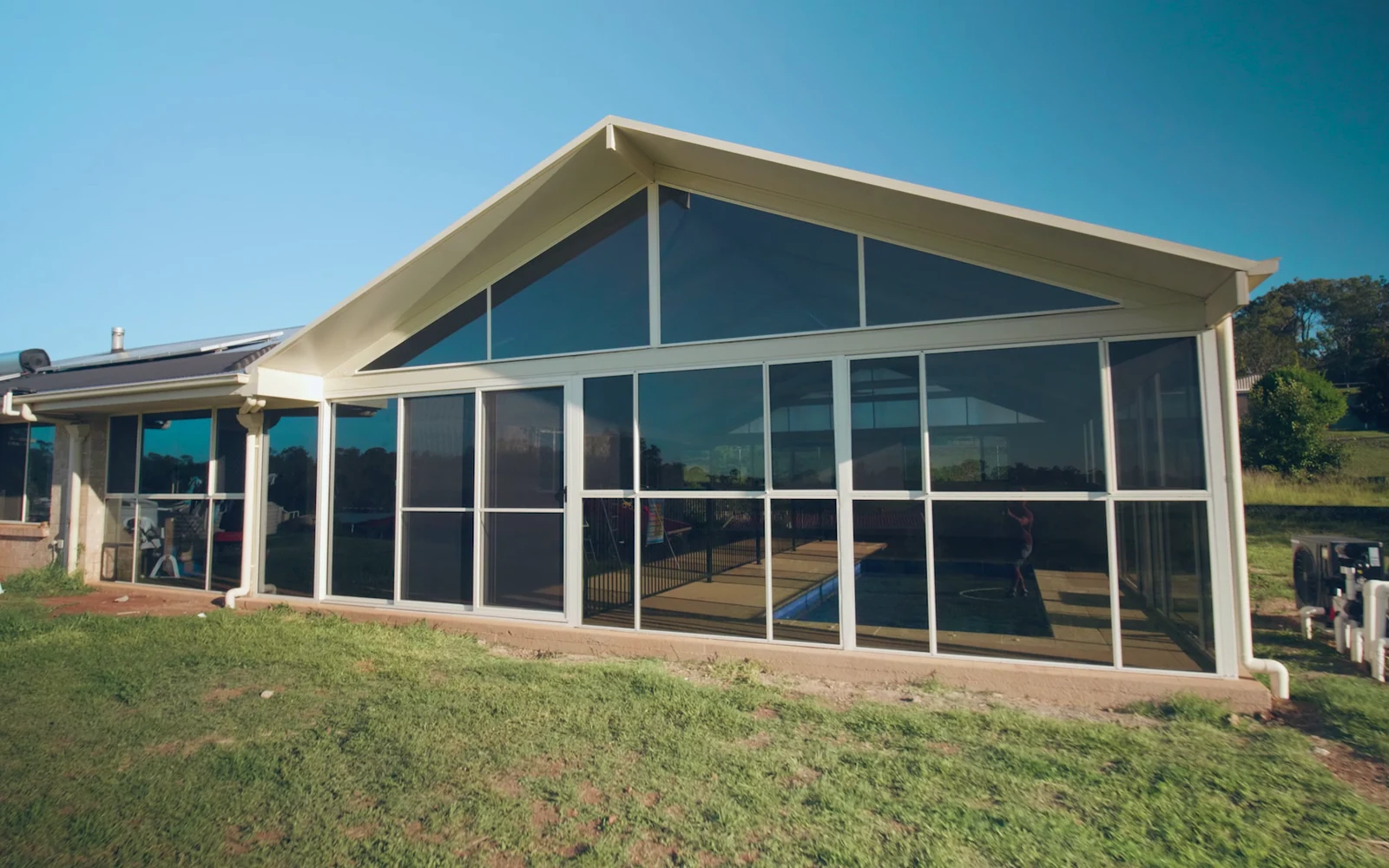
Large glazed areas need project-level review because orientation, panel size and room use change the comfort target.
Let YULUX review your drawings before pricing.
Send us your window schedule, floor plans or photos. We review opening sizes, system direction, glass, hardware, finish and packing scope before quoting.