
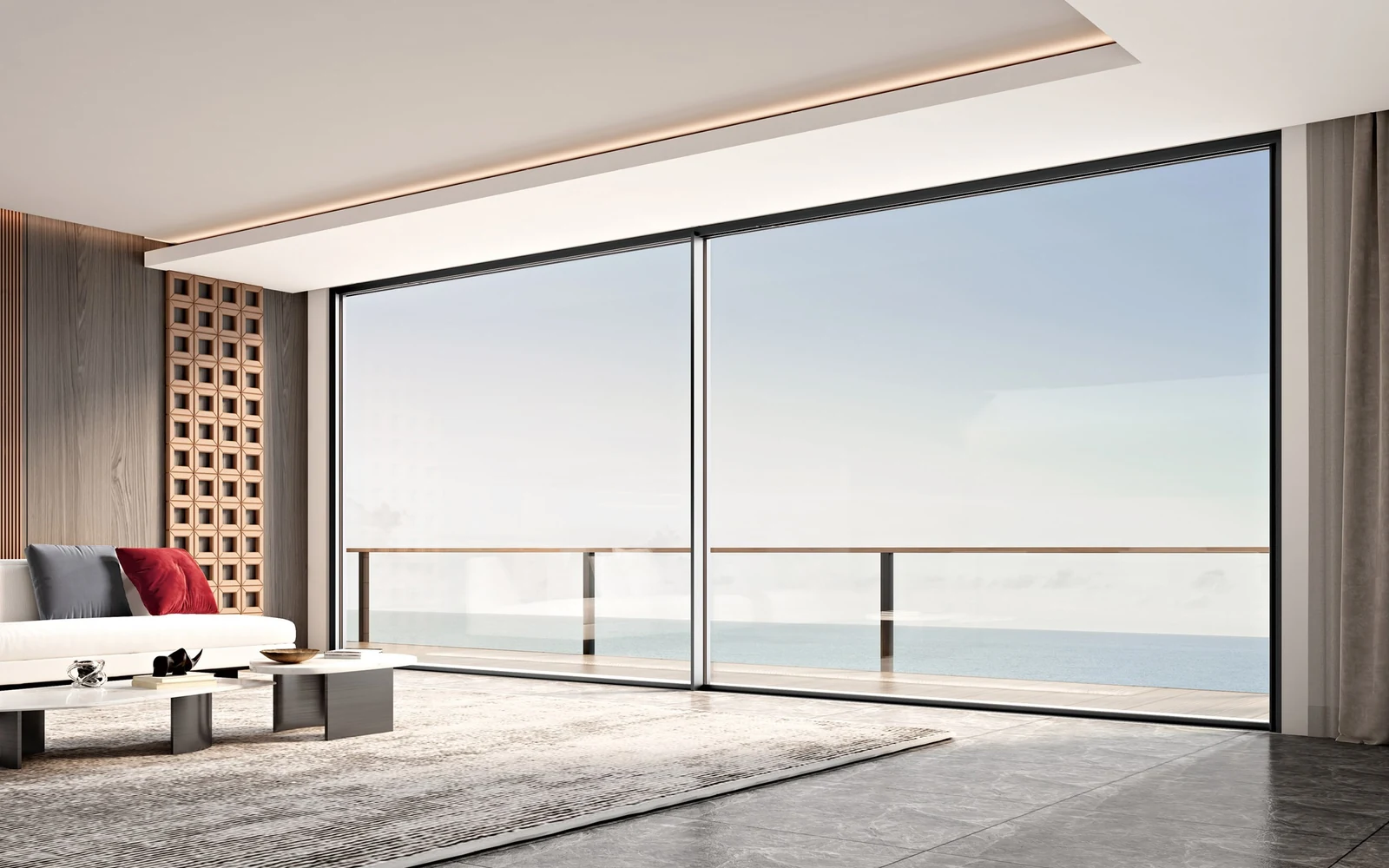
What must be reviewed before quoting a large aluminium sliding or lift-slide door?
A large sliding-door quotation needs the clear opening, overall frame size, panel count, stacking direction, sill and track arrangement, floor interface and drainage path. Glass thickness and make-up affect panel weight, so roller capacity, hardware, frame reinforcement, transport limits and installation handling should be reviewed together. The buyer should also identify exposure, wind and rain expectations, threshold accessibility, insect screens, handle and lock preferences, finish, packing and delivery access. The quotation should state assumptions and maximum panel directions, giving the project engineer and installation team a clear basis for structural, weather and safety review. Record those decisions by opening mark so every quoted option remains traceable. Local structural and installation review remains necessary.
Buyer decision boundary
Do not finalise large sliding-door layout from a rendering or clear opening alone; panel, glass, threshold, drainage and handling require review.
Evidence to request or retain
- Latest dimensions.
- Panel split sketch.
- Glass build-up.
- Threshold and drainage note.
- Unloading plan.
Example input: Large-door review
- Opening
- Size
- Panel split
- Glass
- Threshold
- Drainage
- Unloading
What this guide does not confirm
Not structural, drainage, weather, lifting or installation approval.
Large-door review sequence
| Decision | Required input | Risk if omitted |
|---|---|---|
| Panel layout | Opening size, count and stacking direction | Wrong operation or oversized panels |
| Track and sill | Floor interface, threshold and drainage | Water or installation conflict |
| Transport | Panel weight, route and site access | Unsafe handling or packing changes |
Which opening and panel dimensions must be confirmed?
Large openings look simple in renderings, but panel size changes the engineering conversation. Width, height, glass thickness, frame series, roller load and site handling all affect whether a sliding, lift-slide or folding direction makes sense.
Before quotation, send the clear opening, desired panel split, floor level and whether the door is exposed to rain or wind. This lets the factory check the practical size before promising a clean wide view.
How do track layout and drainage work together?
Track depth, threshold height and drainage route should be reviewed as one detail. A low threshold may look better, but exposed openings still need a water path. A deep track may feel more secure, but it affects floor detail and daily movement.
If the opening faces a balcony, courtyard, pool area or coastal exposure, tell the supplier early. Drainage details should be part of the system discussion, not a small note after price.
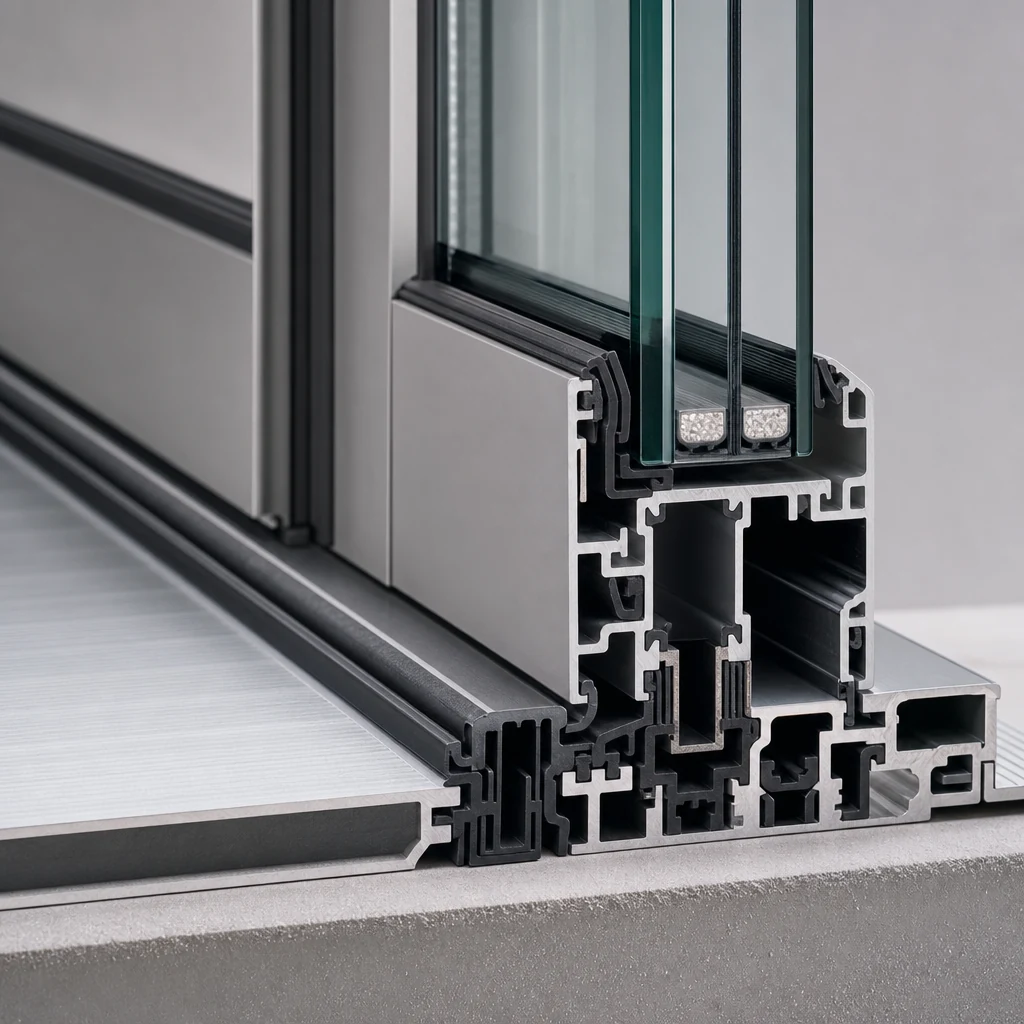
Use a threshold section to discuss the finished-floor interface. Confirm track layout, drainage paths and panel support in the project drawings.
Why do glass weight and roller capacity need one review?
A large sliding door is used by people, not only measured by size. Panel weight, daily use, handle height, lock style, screen requirement and maintenance access all matter. A heavy glass panel with weak rollers will feel poor even if the frame looks good in photos.
Ask the supplier how rollers and locks are selected for the panel weight. If the answer is only a product name, request a clearer hardware scope.
Which packing and site-access limits affect the design?
Double glazing, laminated glass, Low-E, acoustic glass or thicker safety glass can all increase weight. Weight then affects roller selection, panel size, crate design and site handling.
A supplier should not finalize a beautiful wide panel layout before checking the glass build-up. If the buyer wants fewer vertical lines, the factory can compare panel options and explain where cost, weight and handling become more serious.
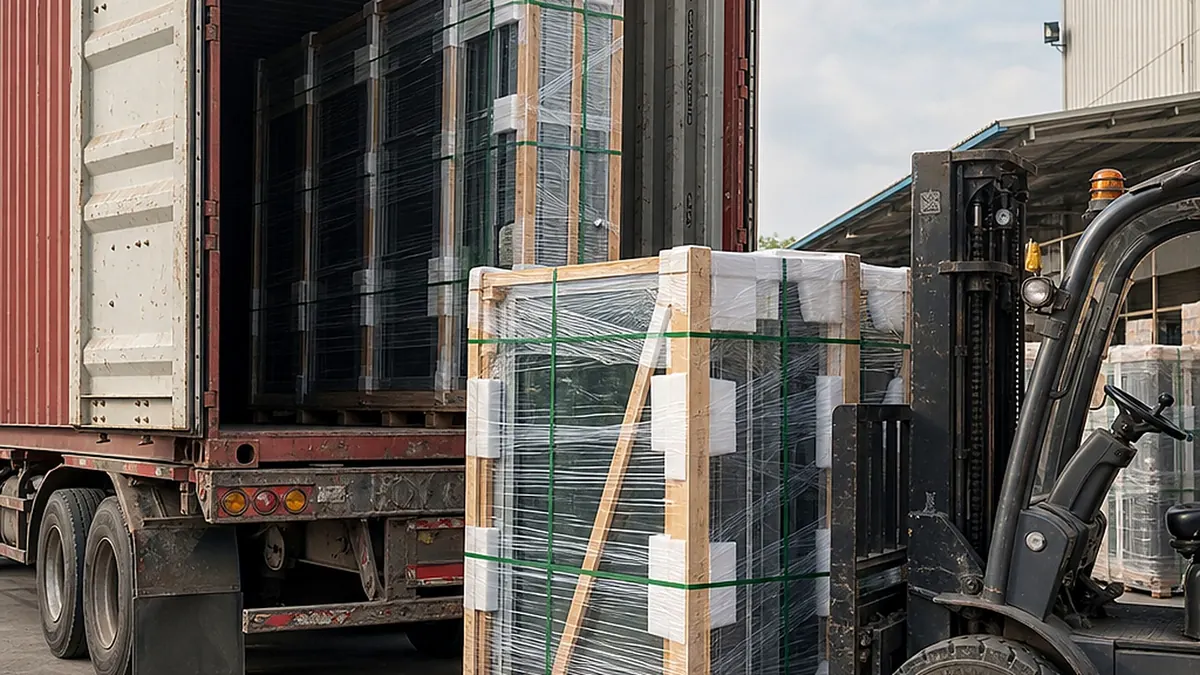
Check packed dimensions and site access before ordering large panels. Include the lifting and unloading method in the quote scope.
5. Plan packing and unloading for large panels
Large sliding doors are not easy to handle after arrival. The crate may be long, heavy and fragile. Tell the factory whether the goods will be unloaded by forklift, crane, warehouse team or site workers. This can change crate size, label position and loading sequence.
For builder orders, ask for a packing list that matches the opening schedule. Large panels should be easy to identify before they are moved.
6. Send a door brief that separates the moving parts
A useful large-door inquiry should not be one sentence and a photo. Send clear opening width and height, preferred panel split, glass target, threshold expectation, screen need, floor level, exposure condition and delivery term. If you already know FOB or CIF, include that too.
This helps the factory answer the real question: which track, roller, glass build-up, frame depth, drainage and crate plan should be quoted for this opening. The price is easier to compare when those assumptions are visible.
Let YULUX review your drawings before pricing.
Send us your window schedule, floor plans or photos. We review opening sizes, system direction, glass, hardware, finish and packing scope before quoting.