
Tempered Glass Marking Explained for Import Buyers
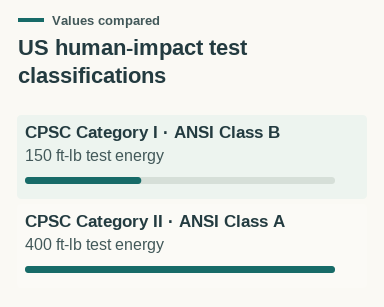
A tempered-glass mark identifies the processor, applicable safety standard and any certified impact class. In the US CPSC classification, Category I corresponds to 150 ft-lb and ANSI Class B, while Category II corresponds to 400 ft-lb and ANSI Class A. Match that class to the glass location and product required by the order. CPSC impact-category explanation
Where should you look for the tempered glass mark?
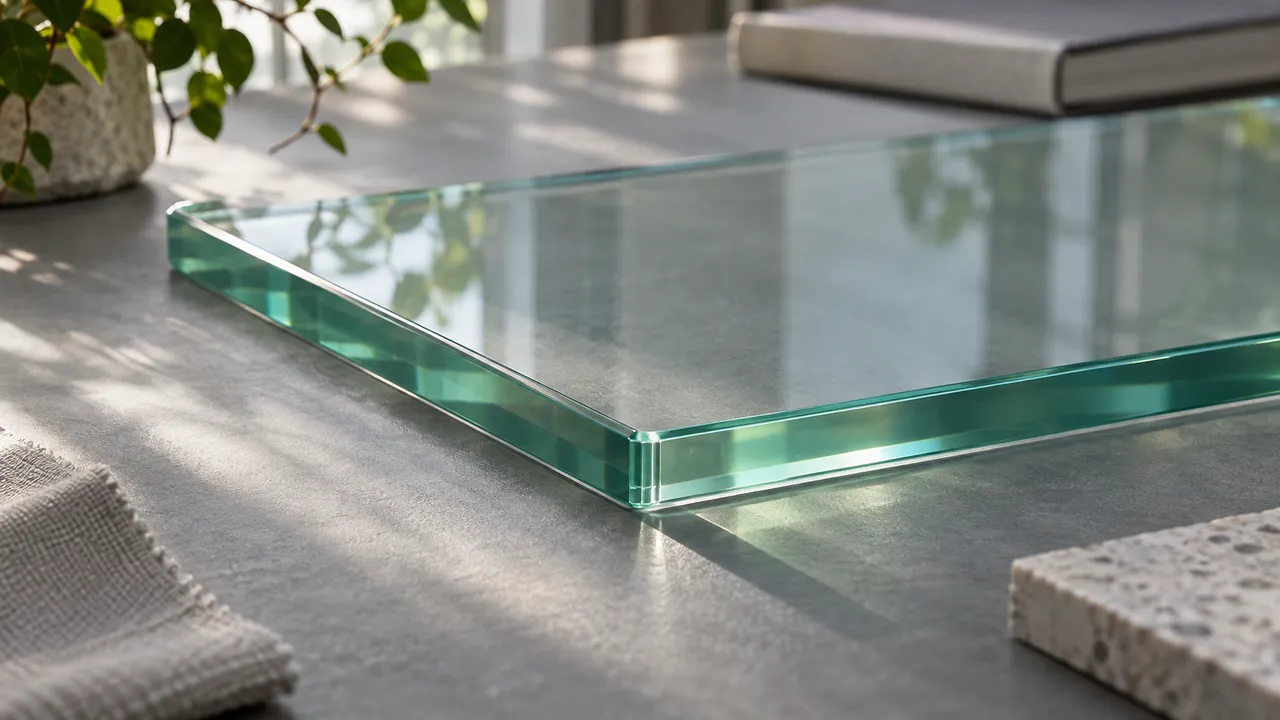
Inspect accessible corners under light across the surface to read faint permanent lettering. Photograph the complete mark and identify which pane it belongs to before the frame or packing hides it.
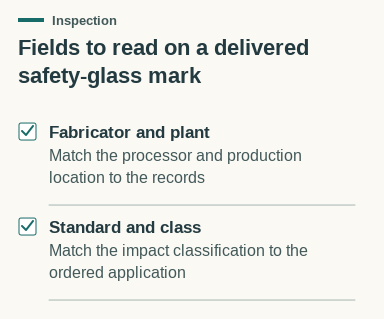
Read the characters in their original order. A manufacturer identifier, a standard number, an impact category and a certification reference answer different questions. Date and thickness details may also appear. Put the photograph against the opening number and pane position so that an interior lite cannot accidentally stand in for an exterior lite.
The US regulatory definition of a permanent label requires continued legibility and visibility after installation, with destruction on attempted removal. It includes several marking methods, including destructible polyester labels. Permanence therefore needs to be judged against the applicable marking requirement. Federal definition of permanent label
Fields to read on a delivered safety-glass mark
What do ANSI Z97.1 and CPSC Category I or II mean?
The current federal rule incorporates ANSI Z97.1-2015 test provisions and covers specified architectural products, including doors, shower enclosures and patio-type sliding glass doors. Its scope and exemptions need to be matched to the installed product. A window schedule should also identify the governing local building-code requirement for its location. 16 CFR Part 1201
Read a third-party certification identifier against that program's product record. Under SGCC's published label requirements, the permanent label identifies the applicable standard and category, certified size classification and impact class. Its number identifies the supplier and fabrication location. An ANSI-only label can carry manufacturer identification and a standard reference without claiming participation in that certification program.
US human-impact test classifications
How does a buyer decode a mark without copying a certification seal?
| Mark element | Meaning to establish | Receiving decision |
|---|---|---|
| Fabricator and plant reference | Identity of the glass processor and production location | Match the product record to the delivered pane |
| Standard and impact classification | Test basis and declared category | Match the scheduled safety-glass requirement |
| Certification-program identifier | Product and plant coverage within that program | Resolve an unmatched identifier before acceptance |
| Optional date or batch code | Production traceability when the coding key is available | Link to the delivery and production record |
What changes for Australian and UK orders?
In Australia, AS 1288 addresses glass selection and installation. AGWA's current public guidance states that Grade A safety glass, including imported glass, must meet the relevant AS/NZS 2208 requirements. Keep the glass safety classification associated with its pane. Window performance labels concern the assembly's wind and water performance. AGWA safety-glass and rating-label guidance
For Great Britain, OPSS distinguishes ordinary thermally toughened soda-lime silicate safety glass marked with the manufacturer’s name or trademark and EN 12150 from heat-soaked toughened products marked with EN 14179-2. Pendulum-body impact resistance in the Declaration of Performance needs separate BS EN 12600 test evidence. Match the mark to the glass product category. OPSS product-marking distinctions
What should a Chinese CCC glass mark lead you to?
CNCA-C13-01:2026 took effect on 1 July 2026. Within its catalogue scope, section 18.2 requires a permanent mark on the glass body and a factory code, with an exception for architectural photovoltaic safety glass that permits marking on the smallest sales packaging or accompanying documents. CNCA rule and attachment 11
China's 2026 CCC rule divides ordinary architectural tempered glass into 3 nominal-thickness certification units, t ≤ 6 mm, 6 mm < t ≤ 12 mm, and t > 12 mm. Annex 1 also ties approval within a unit to nominal thickness, maximum developed area, maximum rise and minimum adjacent-edge angle. This makes the approved product range relevant when reading the factory code. CNCA certification-unit requirements
Follow the factory code to the actual production enterprise and the certificate's product coverage and status. A Chinese-market CCC record and a destination-market impact classification each require their own applicable basis. Keep both attached to the order when both are specified.
What happens when the mark and paperwork disagree?
Release a readable mark matching the scheduled standard, impact class and production site to the remaining delivery checks. Hold a missing or illegible identity for identification, and resolve a different standard or production site before distributing the panes to openings.
Keep glass with unreadable identification segregated in its rack. Match the permanent pane mark to the processor, product record and required impact class before installation.
An insulating unit needs an agreed way to identify its constituent panes. Record which pane each photograph shows and connect it to the insulating-glass build-up notation. A mark on a single pane identifies that pane's declared specification. The order's complete build-up remains a separate entry.
FAQ
Does every tempered pane need the same permanent stamp?
Mark content and permitted application methods follow the relevant product, market and certification requirements. Identify the destination and glass use before specifying the mark.
Does an ANSI marking establish SGCC certification?
SGCC certification requires the program's own permanent label on the covered product. Check the program identifier and applicable standard against the certification record.
Can polarised sunglasses authenticate a glass certificate?
A visual observation cannot authenticate a certificate or identify a certified manufacturing site. Use the pane's readable identification and the corresponding product record.
Let YULUX review your drawings before pricing.
Send us your window schedule, floor plans or photos. We review opening sizes, system direction, glass, hardware, finish and packing scope before quoting.