
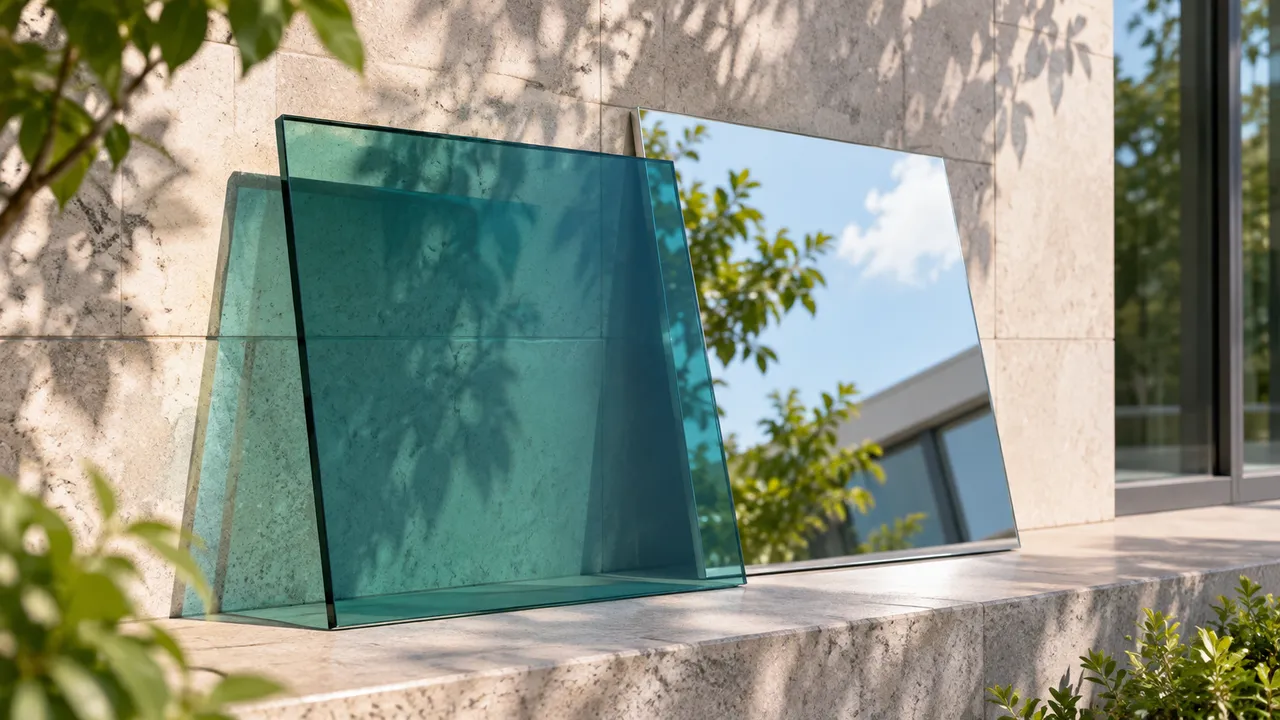
Tinted vs Reflective Glass Windows Under the Same Conditions
Body tint absorbs solar energy within glass, while reflective glass controls reflection and transmission through a coating, permitted on surface 1 or 2 for single glazing with the documented online hard-coat product. Compare solar gain using SHGC: an illustrative value of 0.25 transmits half the solar-gain fraction of 0.50 under the same rating conditions.
The details behind the answer
These are comparison values; select the actual assembly using its SHGC, daylight transmittance and room-side privacy requirements.
What changes when only the tint or coating changes?
Keep thickness, cavity, gas, inner pane, frame, window size and rating method fixed when comparing tints or coatings. Change each glazing attribute separately.
Body colour and a coating can coexist in one panel. A description such as grey reflective glass therefore needs both attributes recorded. It should also identify the viewing side, because the outside appearance and the view from the room serve different purposes.
| Change in the comparison | Keep fixed | Examine in the result |
|---|---|---|
| Clear substrate to body-tinted substrate | Thickness, coating, cavity and frame | VT, SHGC, transmitted colour and absorption |
| Uncoated outer lite to reflective-coated outer lite | Substrate colour, thickness and remaining assembly | Solar gain, daylight and exterior reflection |
| Approved coating surface 1 to surface 2 in single glazing | The same coating and substrate | Exterior appearance and permitted exposure |
| Daylight scene to illuminated-room scene | Glass assembly and viewing location | Visibility into the room after dark |
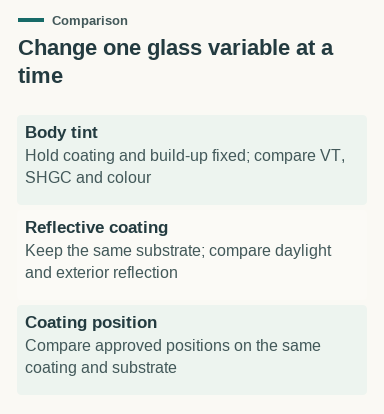
Change one glass variable at a time
Which numbers identify a cooler room with usable daylight?
Compare VT and SHGC on their 0–1 scales alongside U-factor and visible reflectance for the same assembly and rating scope, recording units and whether reflectance is measured from outside or inside. SHGC and visible transmittance both use a 0–1 scale. Lower SHGC admits less solar heat; higher VT transmits more daylight. Identify whether each value describes the glass or the complete window, and compare the same construction and rating scope. For visible reflectance, name the glazing build-up and the measured side, exterior-facing or room-facing.
For a west-facing office, reduce afternoon solar gain while retaining useful daylight. For a shaded bedroom, prioritise daylight and night-time privacy. Evaluate each glass option with the actual orientation and external shading.
Conventional reflective glazing can reduce daylight enough to increase the need for electric lighting. Evaluate the daily occupied hours and the room's useful light distribution alongside cooling needs. This lighting trade-off is discussed in the DOE overview of reflective coatings.
| Quantity | Scope to state with the value | Comparison requirement |
|---|---|---|
| VT | Glass-only or complete window | Same build-up and reporting method |
| SHGC | Glass-only or complete window | Same assembly and rating conditions |
| U-factor | Glazing-only or NFRC whole-window rating | Same scope, units and temperature conditions |
| Visible reflectance | Glass or glazing assembly; exterior or room side | Same measurement side and assembly |
Does darker tinted glass insulate better?
Specify tint for appearance and solar control, and specify U-factor for non-solar heat transfer. SHGC includes directly transmitted solar energy and the absorbed portion released indoors. NFRC whole-window U-factor includes the frame and spacer; glazing-only U-factor covers the glass construction. DOE terminology Assess insulation with whole-window U-factor rather than tint depth, and compare solar gain separately on the 0–1 SHGC scale.
How does reflective privacy change after sunset?
Assess night privacy with 2 lighting scenes—brighter daylight outside and brighter lights inside—because reflective glass can expose the room when indoor lighting dominates. Review the actual room-facing view as well as the street-facing view when selecting the glass.
Provide curtains or blinds where bedrooms, hotel rooms or meeting rooms need privacy after dark.
A facade also presents changing reflections to its surroundings. Place the proposed sample where the design team can judge adjacent buildings, walkways and the main approach. A photograph taken under one sky condition gives only that particular appearance.
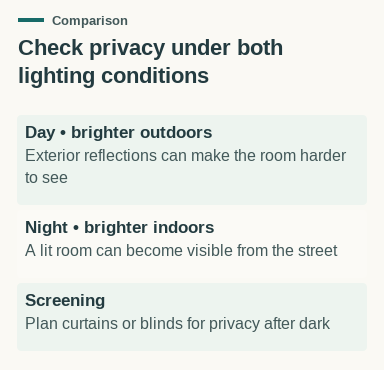
Check privacy under both lighting conditions
What does coating position change for fabrication?
One Chinese online hard-coat product permits surface 1 or 2 in single glazing and requires no edge-coating removal when made into an insulating unit.
That manufacturer's description also connects appearance with substrate colour, coating colour, coating thickness and coating position. Its single-pane surface choice therefore belongs on the fabrication description. The permission applies to the stated online hard-coat product.
For an insulating unit, number the surfaces from the outdoor face toward the room and locate each coating explicitly. Use the selected product's processing instructions for exposed use, edge treatment and assembly. The approved sample and the glass schedule should identify the same surface.
If the elevation also contains concealed floor zones, the spandrel and vision-glass comparison covers their different backgrounds. A matching colour label across those zones still needs an assembled facade sample.
The price comparison for an imported order
Price 2 completed window alternatives with the same sizes, quantity, frame finish, safety-glass treatment and delivery scope. Keep the selected glass changes visible in the quotation. This allows the buyer to see the actual premium or saving for that order.
For a distributor, preserve the chosen glass description with each repeat order so later batches can be priced against the same specification. For a developer, identify which elevations use each alternative. Mixed facade orientations can justify different selections, but the schedule should make that allocation deliberate.
FAQ
Can tinted glass also have a reflective coating?
Yes. Body colour and a surface coating are 2 separate attributes that can be combined in a glass product. Specify both the substrate tint and the coating position.
Which glass should a buyer choose for strong afternoon sun?
Evaluate SHGC and VT together on their 0–1 scales, using the same complete window and shading conditions. Select the option that meets the project's solar-gain target while retaining usable daylight.
Will reflective glass keep a lit bedroom private?
Night privacy requires a separate assessment with the room lights on. Reflective glass can allow views inside when the interior is brighter than outdoors, so include the intended blind or curtain arrangement.
Let YULUX review your drawings before pricing.
Send us your window schedule, floor plans or photos. We review opening sizes, system direction, glass, hardware, finish and packing scope before quoting.