
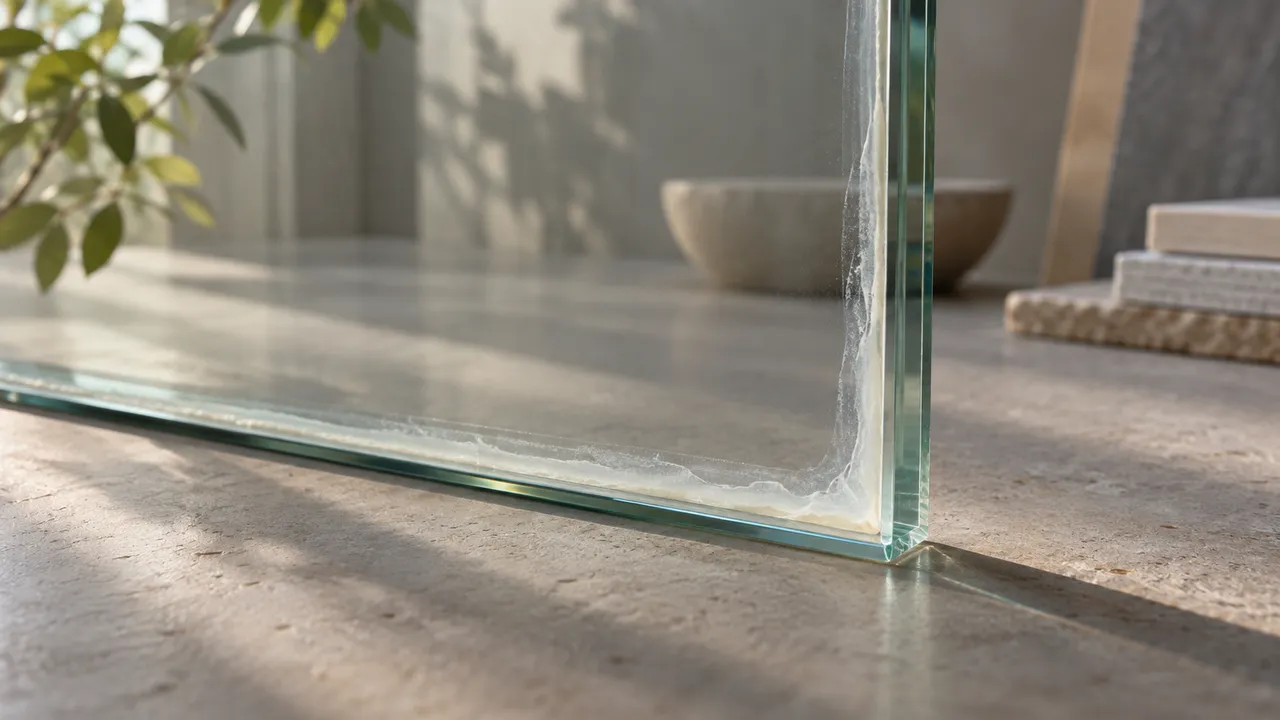
Silicone Sealant Staining on Glass and How to Diagnose It
Locate silicone-related marks before treatment: NGA recommends a small-area trial with clean water and a mild, non-abrasive solution on each identified glass construction, followed by daylight inspection before wider cleaning.
Is the mark on the surface or between the panes?
Start with the pane identity and the position of the mark. View it from both sides where access is safe, keeping the lighting and viewing direction consistent for photographs. Record whether it follows the sealant edge, spreads across the exposed face or appears beyond the surface that the cleaner can reach.
A smear left during glazing can be accessible from the room or exterior. A mark in the sealed cavity requires the glass fabricator to assess the insulating-glass unit. Locating the affected face prevents repeated work on a clean outer surface while the original mark remains visible behind it. Silicone-related staining can be surface residue or internal contamination, with 2 mechanisms documented in one sealant producer's cases, mineral-oil migration producing iridescent film and oil attack on the primary butyl seal producing dark trails.
Identify the glass construction before testing a treatment. A tinted pane, a reflective coating and an exposed surface treatment can need different handling. The comparison of tinted and reflective window glass explains the appearance choices that should be recorded alongside the inspection photographs.
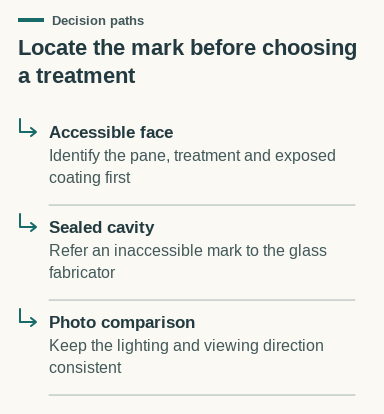
Locate the mark before choosing a treatment
How should a small cleaning trial be carried out?
Use a 3-step cleaning check: identify the exposed glass and coating, trial clean water and a mild non-abrasive solution on a small area, then inspect in daylight before wider cleaning. NGA architectural-glass cleaning guidance supports the trial method.
- 1. Photograph the dry mark and identify the exposed coating, if present. Choose an adjacent comparison area and keep its condition recorded.
- 2. Use the glass producer's approved routine cleaning method on the selected area. Keep the tool, solution and contact conditions consistent throughout that trial.
- 3. Rinse and dry as directed, then inspect in daylight from the same viewing positions. Record whether the film has cleared, reduced or remained.
- 4. Stop the trial if the surface changes adversely. Refer stubborn residue to the glass or coating producer before selecting a stronger treatment.
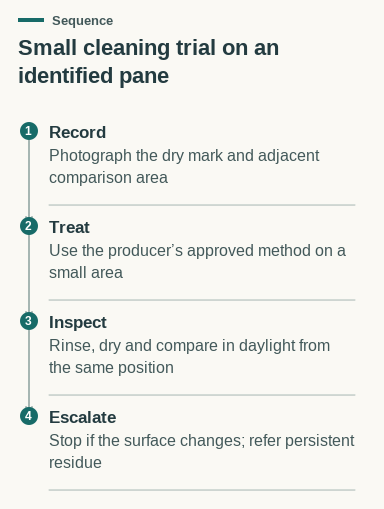
Small cleaning trial on an identified pane
Can a blade or solvent remove the remaining silicone?
NGA's architectural-glass cleaning guidance prohibits blades on coated surfaces and excludes metal scrapers from routine cleaning. Identify the exposed coating before selecting tools. NGA cleaning guidance
One glass maker's cleaning instructions for its identified pyrolytic Low-E coating families separate routine cleaning from stubborn-deposit treatment. Use only the instructions for the actual coating, keeping any specified spot-cleaning solvent off adjacent sealants, framing and paintwork.
If stronger cleaning would disturb the sealant joint or require dismantling the glazing, hand the work to the glazing specialist. A maintenance decision for a finished window has to preserve the joint that holds or seals the glass while addressing the visible deposit.
Why can oily or rainbow marks develop inside the glazing?
One Chinese sealant producer describes 2 contamination paths in its published insulating-glass cases. In one, mineral oil migrates into the cavity and produces an iridescent film. In the other, oil dissolves the primary butyl seal and produces dark oil marks or trails. Record the colour and position, then have the material mechanism investigated.
Another sealant manufacturer's published engineering case describes migrating plasticisers from an accessory passing through the secondary seal and affecting the polyisobutylene primary seal. The investigation included the gasket material. A recurring mark can therefore lead the fabricator to examine the contacting materials around the unit as well as the sealant itself.
Compare the gasket, spacer and sealant combinations in affected and unaffected units from the same installation. A changed accessory between production batches gives the fabricator a specific material combination to investigate.
What changes when one material or treatment changes?
Record whether the mark returns after cleaning. Compare materials under the matched conditions in the table.
| Single change | Keep consistent | Observe next |
|---|---|---|
| Approved cleaning method on a small surface area | Glass construction and viewing conditions | Residual film after drying and any later return |
| Gasket or accessory in a fabricator's comparison specimen | Glass, sealant and exposure conditions | Discolouration or adhesion changes associated with that combination |
| Sealant in an otherwise matched comparison specimen | Accessory materials and specimen preparation | Results for the complete contacting-material combination |
What does a compatibility report cover?
ASTM C1087-23 screens accessories used with structural-glazing sealants through heat and ultraviolet exposure. Its public scope describes 3 observations, covering sealant colour, adhesion to glass and adhesion to the accessory. Match the named materials in a report to the combination under investigation.
ASTM C1248-22 addresses staining of porous substrates by joint sealants and describes 4 laboratory exposure conditions in its public scope. Use that result when assessing the relevant porous surround, such as stone. Glass-surface deposits and accessory compatibility require their corresponding material assessments.
FAQ
Will acetone remove silicone without harming a window?
Use acetone only where the identified glass, coating and adjacent-material instructions permit it. Perform a small trial, inspect after drying, and keep the solvent away from sealants, framing and paintwork.
Does a rainbow mark prove that sealant contains mineral oil?
A rainbow mark requires surface identification and material investigation. One published Chinese case links an internal iridescent film to mineral-oil migration, while a second path produces dark trails through interaction with the primary butyl seal.
What should a structural-sealant compatibility check examine?
ASTM C1087-23 describes 3 observations after the specified exposure, covering sealant colour, adhesion to glass and adhesion to the accessory. The actual accessory and sealant combination belongs in the assessment.
Let YULUX review your drawings before pricing.
Send us your window schedule, floor plans or photos. We review opening sizes, system direction, glass, hardware, finish and packing scope before quoting.