
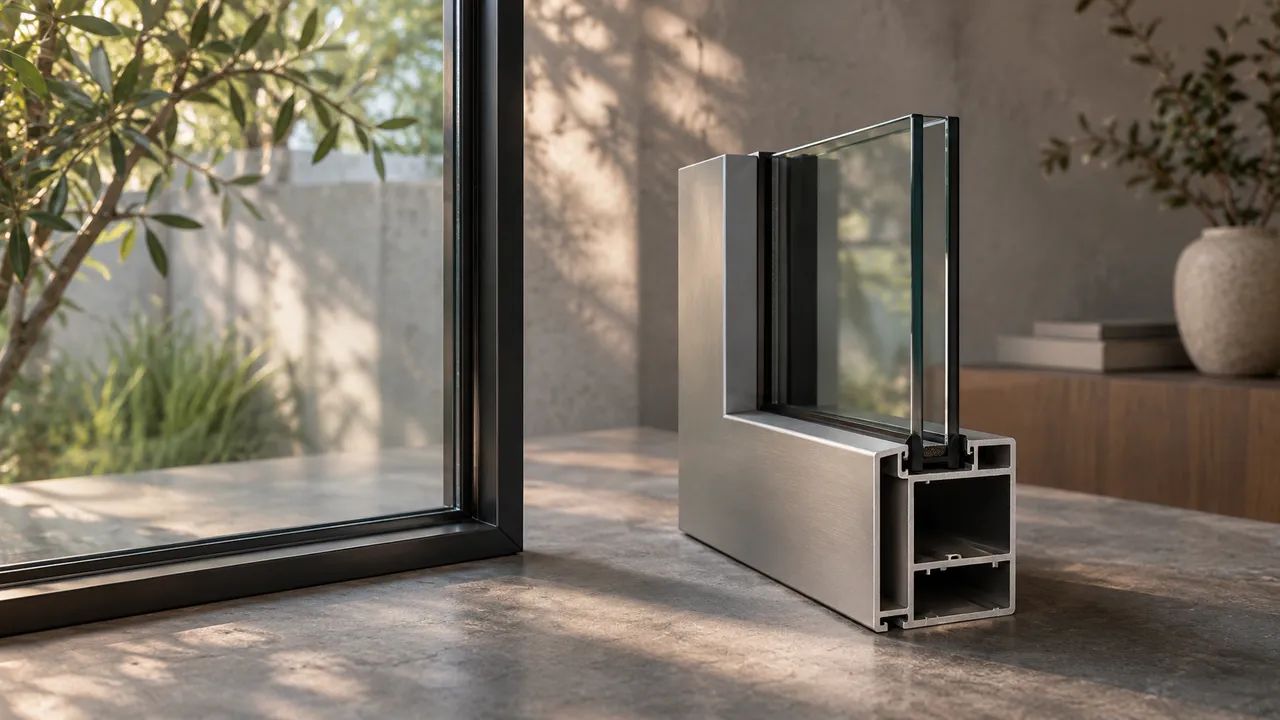
Aluminum vs Steel Windows for a Matched Project Specification
Choose aluminium for lighter extruded framing and steel when slender steel sections or a historic appearance control the elevation. Compare complete-window thermal ratings for both. NFRC's aluminium-frame example drops from roughly 2.0 to 1.0 Btu/(h·ft²·°F) with standard thermal breaks, illustrating the importance of the frame construction. NFRC metal-frame explanation
Which frame gives the sightline and opening you need?
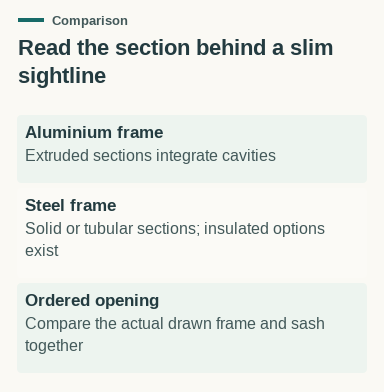
A narrow frame can preserve the proportions of a historic elevation or increase the visible glass in a new opening. Steel offers slender framing options, including solid hot-rolled sections and cold-formed tubular sections. Aluminum extrusion accommodates complex cavities, gasket grooves and drainage paths. Both materials need a section drawing that matches the proposed opening.
The Steel Window Association describes narrow sightlines and thermally insulated tubular profiles in its March 2014 guide. Evaluate the frame, opening sash, central meeting stile and coupling separately. Their combined visible widths determine the finished elevation. Steel Window Association section guide
| Project priority | Selection | Trade-off |
|---|---|---|
| Lower handling mass and complex integrated frame cavities | Aluminium extrusions | Verify the complete sash mass including glass and hardware |
| Slender steel sightlines or an existing steel elevation | Steel sections matching the required profile | Include protective finish and access for repair |
| Heating or cooling performance | Select either metal using the specified whole-window rating | Thermal breaks, glazing and edge spacers all contribute |
Choose the elevation first, then establish the member sizes and connections needed for the project loads. A narrow visible face can conceal substantial section depth. Material stiffness, section geometry, unsupported span and joint restraint all influence deflection and operating clearances.
Read the section behind a slim sightline
Will aluminum or steel give the lower whole-window U-value?
The lower whole-window U-value belongs to the specified assembly with the better combined frame, glazing and edge performance. Thermal separation can improve either metal-frame design. In a heated room, the section through the sash and outer frame should show how the insulating connection continues around the opening.
Keep the comparison size, opening type, glazing build-up and rating method identical. Include solar heat gain where cooling demand matters, and air leakage where drafts affect comfort. Metal conductivity alone leaves the geometry and glazing contribution unresolved. The U-value and SHGC guide explains the separate quantities.
How do corrosion protection and repairs change ownership?
For factory-applied stoved polyester steel-window finishes, the Steel Window Association recommends washing every 3–12 months according to grime and atmospheric salt.
The same guidance calls for annual inspection of working parts, weatherseals and joint sealants. Its repair guidance includes damaged coating, blocked drains, replacement seals and specialist restoration of older steel frames. Keep repainting plans specific to the actual coating and exposure. A warranty period describes contractual cover, while service life also reflects condition and maintenance. Steel Window Association aftercare guidance
On aluminum, record the specified finish, its cleaning instructions and the treatment of joints and contact with other metals. Coastal exposure makes coating damage, salt retention and inaccessible crevices important selection issues for both materials. The coastal aluminum maintenance guide covers the aluminum care plan.
For an imported assembly, identify a practical route to replacement gaskets, hinges, locking parts and glass. A repairable frame still needs compatible consumable parts. Include access equipment and temporary weather protection in the maintenance budget where glazing is high above ground.
How much does the material choice change transport and installation weight?
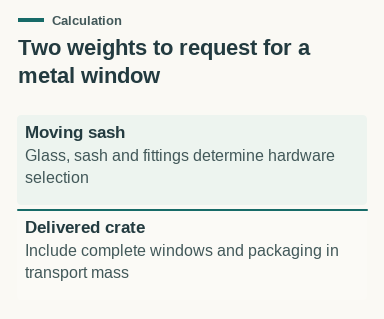
Use complete sash mass for hardware selection and packed unit mass for freight and lifting. Glass, hardware and packaging contribute to both material options.
For this handling example, assume identical units with 60 kg of glass each, frame-and-hardware masses of 15 kg for aluminium and 30 kg for steel, and 10 kg of packaging per unit.
The aluminum unit weighs 75 kg before packing and 85 kg packed. The steel unit weighs 90 kg before packing and 100 kg packed. The packed difference is 15 kg, about 33 lb, or approximately 18% relative to the aluminum package.
The heavier package changes handling requirements even when both occupy the same crate volume. The installation plan must account for access, centre of gravity, glazing retention and approved lifting points. Glazing separately on site can change the handling sequence and introduces site glazing labour, weather exposure and protection responsibilities.
Two weights to request for a metal window
What cost range can buyers use without mismatching the specifications?
Compare dated offers for the same size, opening layout, glazing, whole-window performance, finish and installation. Steel fabrication and protective finishing can add cost, and highly specified aluminium also carries additional processing and component costs.
Chuzhou’s April 2025 material-price schedule lists tax-inclusive RMB 520–580/m² for four 80-series thermally broken aluminum sliding-window configurations with 1.8 mm profile walls.
The four entries use different glazing, ranging from ordinary insulating units to tempered Low-E units. The prices are a historical local Chinese reference. Current export and installed prices need dated offers with their own supply terms. Chuzhou housing authority price schedule
FAQ
Is steel always three times stronger than aluminum?
Compare the specified alloy or steel grade, section geometry, joints, span and complete-assembly rating. Each affects window capacity, so use the actual sections and connections when choosing between aluminium and steel.
Can a steel window have a thermal break?
Yes. Steel framing is available with thermal separation, including insulated tubular sections. Evaluate the complete configuration and its whole-window rating.
Does a narrow steel frame guarantee the lowest installed cost?
Installed cost includes fabrication, glazing, finish, packing, handling and site work. Use matched project offers to establish the price range for each material.
Let YULUX review your drawings before pricing.
Send us your window schedule, floor plans or photos. We review opening sizes, system direction, glass, hardware, finish and packing scope before quoting.