
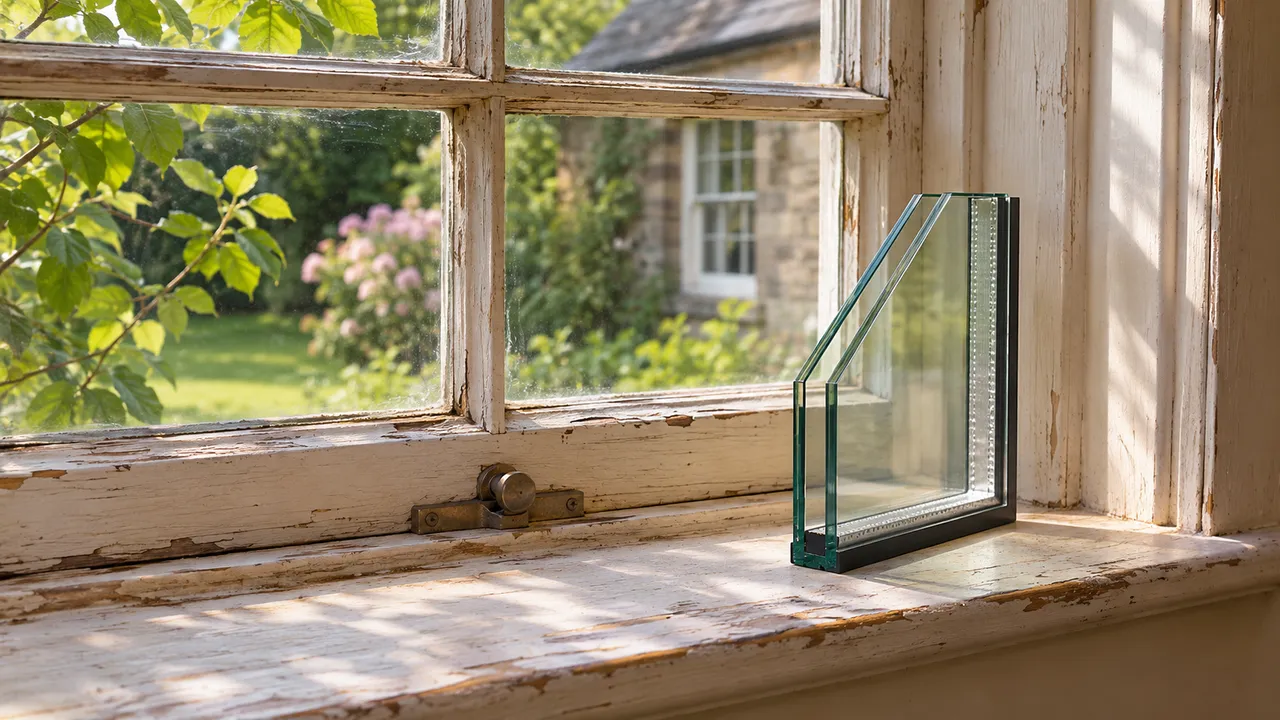
Retrofit Glazing vs. Full Replacement: Defining Project Scope
Retrofit double glazing is suitable when the retained frame, glazing pocket and hardware can accept the new sealed unit. Full replacement is the practical choice when the frame or wall junction also needs rebuilding.
Choose the renovation scope
| Existing condition | Choose | Work and trade-off |
|---|---|---|
| Sound frame with a compatible glazing pocket and serviceable hardware | Glazing retrofit | Retains the frame and wall interface, while replacing glass, beads and seals as required |
| Corroded or distorted frame, failed perimeter interface, or changed opening layout | Full-frame replacement | Allows a new frame and layout, with removal, flashing and making good |
| Sound existing window with room for a separate interior pane | Secondary glazing | Retains the original glazing and adds an accessible secondary layer |
The details behind the answer
Metro's RetroFit brochure uses a reference make-up with 4 mm glass and a 12 mm cavity between the panes, giving 20 mm nominal overall thickness for 4-12-4.
Check glazing pocket geometry and sash weight limits
Have the glazier pull a typical bead during the site survey to check profile geometry, bead engagement, and maximum pocket depth. Measure glass sizes directly, distinct from outer frame dimensions. Any new IGU will require matching setting blocks, gaskets, and proper edge clearance.
Check every opening for bowed sashes, cracked mitres, blocked weep holes, worn rollers or friction stays, and leaks at the perimeter joint. Log defects by individual opening so one sound sample window does not mask failures elsewhere on the elevation.
Keeping the existing aluminium frame means keeping its current thermal performance. If cold bridging or frame condensation is the core issue, price a new thermally broken system as a separate option. Always check total glazed sash weight against the load rating of existing hinges, stays, or rollers before stepping up glass thickness.
Account for perimeter junctions in full replacements
Full replacement strips out the old frame and exposes the wall junction. Make sure your budget covers tear-out, disposal, sill pans and flashings, internal liners, exterior making-good, and access gear alongside the new window units.
Once the old frame is out, inspect the structural substrate and check for breaks in the weather barrier. Deduct your target perimeter joint tolerances from the measured structural opening to set final manufacturing sizes. Keep rough opening and finished frame dimensions clearly separated on shop drawings.
Price both options against an identical window schedule
Price both options off the exact same window schedule. Break out glass or complete unit supply, site labour, access equipment, skip hire, perimeter sealing, and reveal repairs. A glass-only quote and a full turn-key replacement quote cover completely different site liabilities.
Where the survey flags bad openings, price specific hardware repairs or full frame replacements against those exact tags. Keep those provisional sums separate until the work is opened up, rather than burying hidden frame repairs inside a flat glazing rate.
Split the scope where elevation conditions vary
Take a typical office refurbishment: sound fixed lights might only need new IGUs, while a worn-out ground-floor entrance needs complete tear-out, new framing, and a revised door layout. Split the schedule so the upper floors and the entrance carry their own specific removal, glazing, and making-good scopes.
Secondary glazing is another route if the existing frames must stay and the internal reveal has enough depth for an extra track. If you compare it, factor in room for cleaning between panes and check whether you can still reach and operate the primary window hardware.