
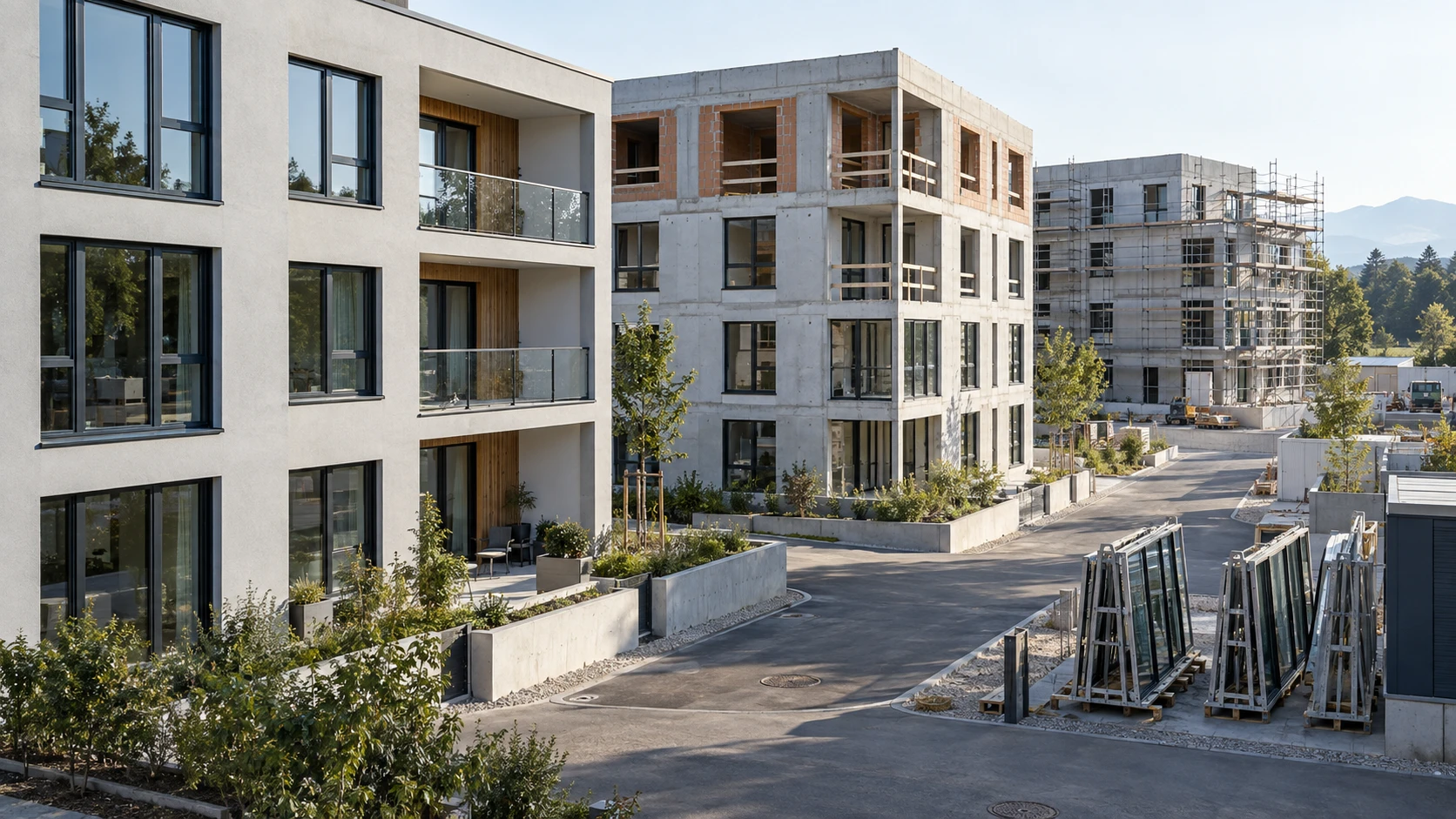
How do contractors plan phased window deliveries across several buildings?
Group openings into installation packages by building, floor or work zone, with an exact opening list for each package. Record required-on-site windows and distinguish requested dates from confirmed commitments. Use separate production and dispatch releases, and attach site-readiness conditions, owners and review dates. When one area slips, revise its package and any shared dependencies before agreeing a new delivery split with the supplier and logistics team.
A completed building is not a delivery instruction
The windows for Building A are ready to receive, Building B has unresolved opening measurements, and Building C has no agreed unloading area. A single project-wide delivery date hides all three conditions. Dispatching the whole order may leave the contractor handling finished windows before the corresponding work area can accept them.
Start a phased window delivery plan from the installation sequence. Give every building, floor or work zone a package ID, then connect that package to the individual opening marks. The purpose is to decide which specific units may move to the next stage, who can authorise that move, and what still prevents it. This is a suggested coordination method for contractors and project procurement teams; agree the actual supply and delivery responsibilities in the order.
Build the map from work area to opening, then add dates
Use the smallest practical package that the site can receive and install together. A floor may be suitable on one job; an elevation or a group of villas may suit another. Avoid packages so small that they create unnecessary split handling. Review the grouping with the installer, supplier and logistics coordinator before it becomes a shipping instruction.
Keep a product-type mark separate from a location ID. W03 might describe the same window type in several buildings. A location such as A-L02-W03-04 identifies one instance, provided that convention is agreed across the schedule and site drawings. List every included opening rather than relying on “all second-floor windows.”
For each package, record a required-on-site window and work backwards with the responsible parties through receiving, transport, dispatch and production planning. Label dates as requested, proposed or confirmed. An installation target does not become a supplier commitment merely because it appears in the programme.
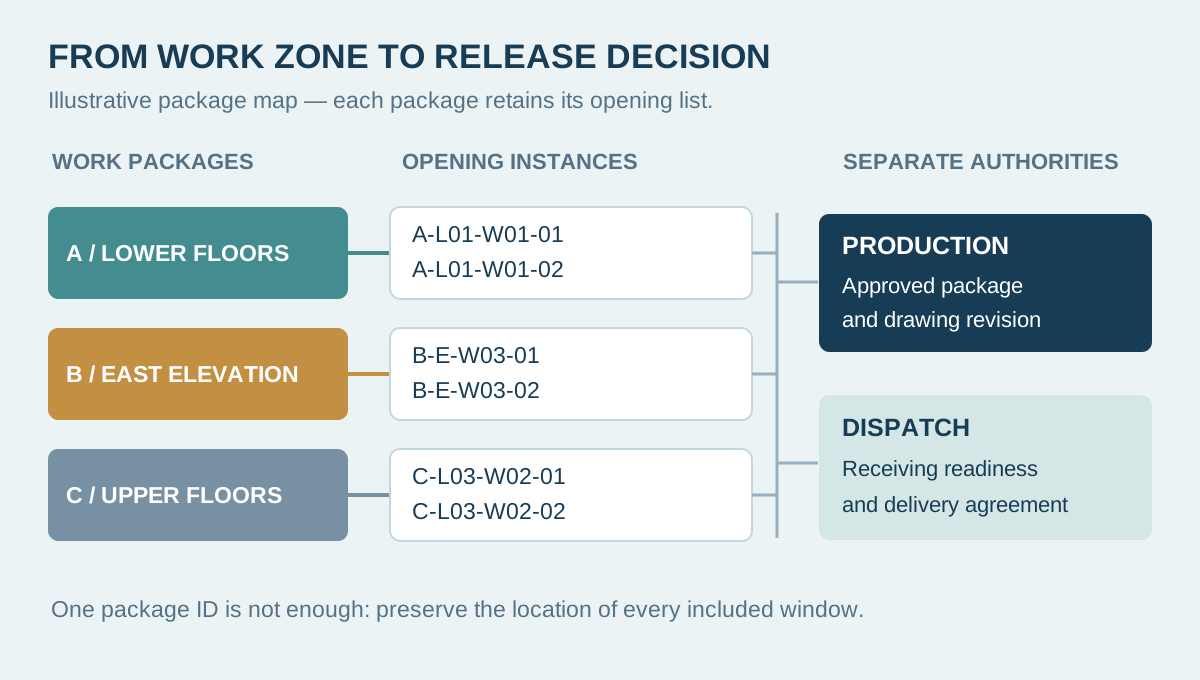
The package groups the work; the opening IDs define its exact contents.
Use two releases and a site-readiness matrix
Production release confirms the particular package and document revision authorised for manufacture. Dispatch release confirms the agreed goods can leave for the named destination under the current receiving plan. The first does not automatically grant the second. A package can be produced while a later site condition still prevents delivery, subject to agreed holding arrangements.
Use a status plus an owner and next action. “Awaiting review” means a named decision is outstanding; “released” needs a dated authority; “hold” needs a reason and a review date. Keep actual dispatch and actual receipt as later events, supported by their respective records.
| Package and openings | Release record | Site condition to close | Owner / next review |
|---|---|---|---|
| [building / zone] [opening IDs] | Production: [revision / authority / date] | [dimensions and design questions resolved] | [reviewer] / [date] |
| [same package] | Dispatch: [destination / authority / date] | [receiving route and unloading team ready] | [site coordinator] / [date] |
| [same package] | Holding arrangement: [reference] | [storage location, duration and responsibility agreed] | [buyer / supplier] / [date] |
| [same package] | Installation handover: [reference] | [work area and interfaces accepted by site team] | [installer] / [date] |
Replace these prompts with project-specific conditions. The site team should define its access, lifting, storage and installation requirements; the procurement sheet records their decisions. A green cell cannot substitute for the responsible person's actual check.
WHO CONFIRMS THE NEXT STEP?
Three decisions in a phased package
| Decision | Required record | Responsible coordination |
|---|---|---|
| Production release | Package opening list and approved revision | Buyer, supplier and designated technical reviewers |
| Dispatch release | Confirmed receiving plan and delivery agreement | Buyer, supplier, site and logistics coordinator |
| Actual receipt | Received package reference and discrepancies | Receiving team and agreed reporting contact |
Fictional site meeting: Building B slips, Building A continues
Fictional planning example, not a completed project or delivery promise. A contractor has three packages. After a programme update, Building B's receiving route is blocked by other works. Building A remains accessible. Building C is still under drawing review.
| Package | Current position | Decision at the meeting |
|---|---|---|
| A / lower floors | Production released; receiving conditions confirmed | Request a separately confirmed dispatch slot |
| B / east elevation | Production released; access route blocked | Hold dispatch; agree storage and a new review date |
| C / upper floors | Opening revisions unresolved | Keep production unreleased; close drawing questions |
Do not move Building B's units into Building A's shipment simply to keep the original total. Ask the supplier and forwarder to review whether a revised split is practical and what cost or timing changes follow. The table authorises a coordination request; it does not itself establish a new transport booking.
Keep the previous programme revision and record which package changed. Reconfirm Building A's scope after the split, including any shared accessories needed for its installation. A delayed package should not quietly take an essential item out of the package that proceeds.
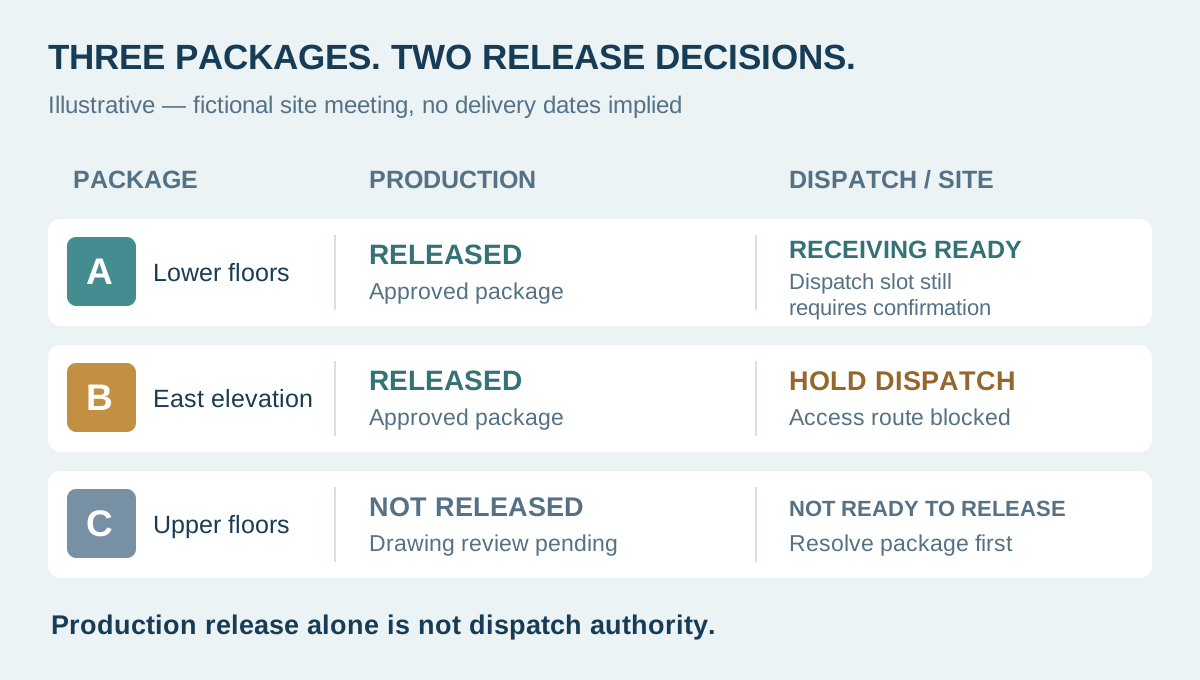
Illustrative package status: Building A can request a confirmed dispatch slot, Building B remains on dispatch hold, and Building C still needs drawing approval.
Run the next coordination call around exceptions
Before each planned release, review only the packages approaching a decision and the conditions that changed. Ask: which openings remain in this package, which revision applies, which site condition is still open, and who must respond by when? Close the call with a dated action record that the supplier and site team can both use.
Once the packages and dispatch sequence are agreed, transfer their IDs into the packing and receiving plan. That guide covers crate labels and physical protection. Here, the controlling question is whether the destination can accept this particular package at this stage.
For a YULUX enquiry, send [building/zone map], [opening list per package], [drawing revision], [required-on-site windows], [release owners], [receiving constraints] and [proposed holding arrangements] through the quotation form. Ask for the proposed production and delivery split, its commercial effects, and the decisions needed to confirm it. YULUX can coordinate the window and door scope around the confirmed order; keep site readiness and the delivery agreement visible alongside the product schedule.
TAKE IT TO THE NEXT SITE MEETING
Give every open condition
an owner and a next step.
Phased project enquiry fields
- Building, zone and package IDs
- Included opening IDs and drawing revision
- Requested on-site date window per package
- Release contacts and site receiving constraints
- Proposed holding arrangement and next decision date
Bring the current records
- Package-to-opening map and current drawing revision
- Production and dispatch authorities recorded separately
- Site-readiness conditions with named owners and review dates
Agree the authority
A programme date is a planning input. Production, dispatch, holding arrangements and transport changes require the applicable parties to confirm their scope and responsibilities.
Keep the open items visible
The example does not set a lead time, reserve transport capacity or confirm that a site is ready to receive.