
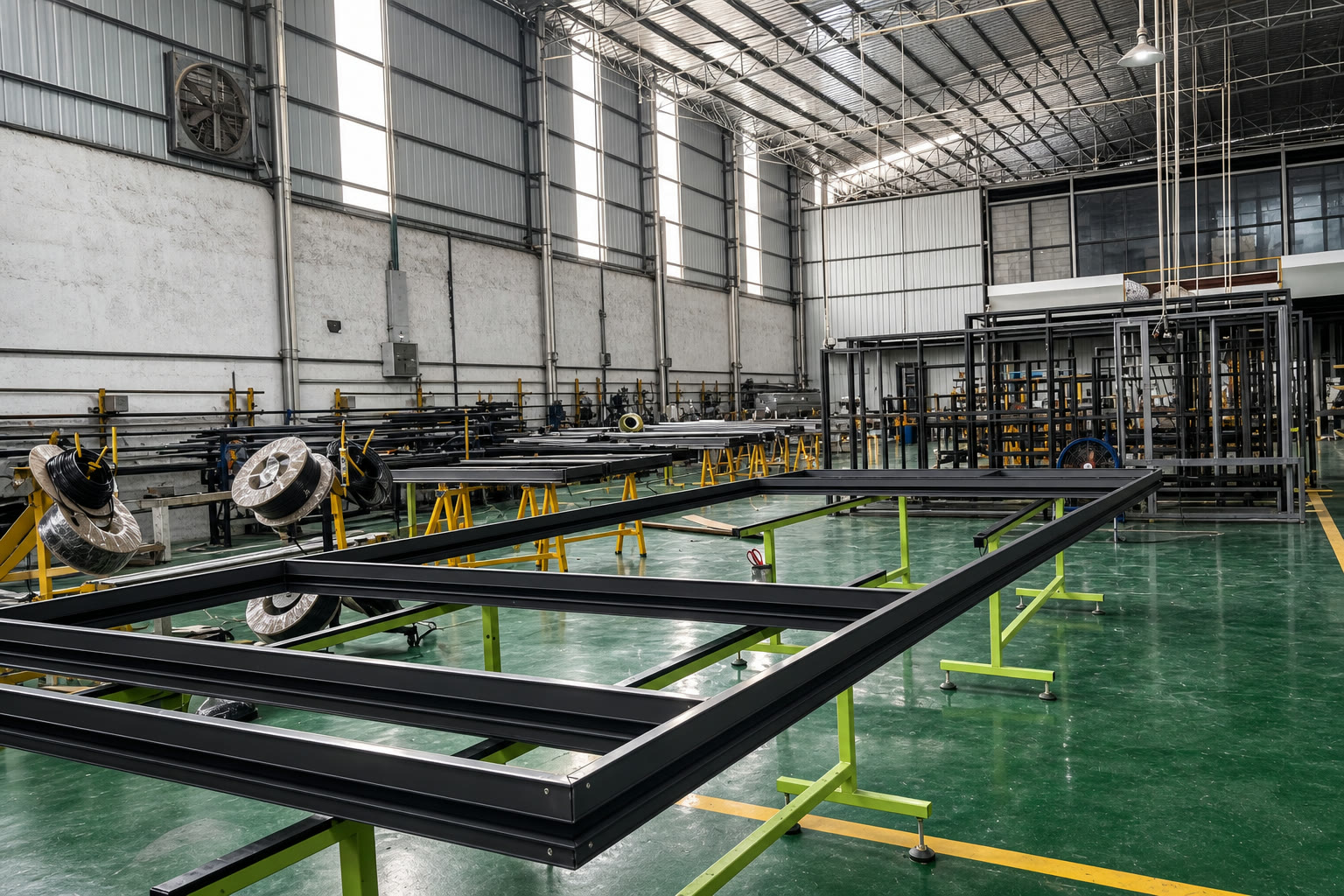
How can buyers compare aluminium window suppliers in China beyond unit price?
Compare suppliers against the same drawings, opening schedule and written scope. Check the proposed frame series, wall thickness where relevant, glass build-up, finish, hardware, screens, accessories, reinforcement, testing or document assumptions, packing and delivery terms. Ask who reviews drawings, how revisions are recorded, whether production and packing information can be matched to the quoted scope, and how replacement parts are traced after delivery. Record every clarification in the final comparison sheet. A lower unit price may exclude glass details, hardware grades, labels, crates or technical review, so buyers should create a clarification list and normalise every quote before making a decision.
Buyer decision boundary
A brochure, fast reply or low price does not establish identity, capability or delivery ability; independently compare written scopes.
Evidence to request or retain
- Verified identity.
- Same drawing revision.
- Line-by-line scope.
- Revision-control process.
- Dated project evidence.
Example input: Supplier comparison
- Revision
- Scope
- Packing
- Exclusions
- Documents
- Owner
What this guide does not confirm
Not due diligence, credit assessment, audit or guarantee.
Supplier comparison evidence
| Area | Weak evidence | Useful evidence |
|---|---|---|
| Technical scope | Generic model and price | Marked drawings plus system and glass schedule |
| Manufacturing | Unverified claims | Traceable factory, process and packing evidence |
| Commercial scope | Short unit-price sheet | Inclusions, exclusions, packing and delivery terms |
How should a supplier choose a system for each opening based on building location, size, glass, use, screens, finish and packing?
A useful supplier does not start by pushing one series for every opening. They ask about building type, location, opening size, glass target, use frequency, screen requirement, finish and packing. That questioning habit is a good sign because aluminium windows are project products, not single catalogue items.
If two suppliers quote the same opening with very different prices, check whether they are quoting the same frame depth, glass, hardware, screen and packing scope before deciding who is expensive.
How can a buyer compare quotation inclusions and exclusions line by line?
A low unit price can hide missing glass, weak hardware, different finish, no screen, basic packing or unclear accessory handling. Ask for the quote to separate product series, glass build-up, colour, hardware, screen, drainage notes, packing and trade term.
For builder orders, it is also helpful to separate repeated openings from special items. Large doors, corner windows, sunroom pieces and motorized windows should not disappear inside one average price.
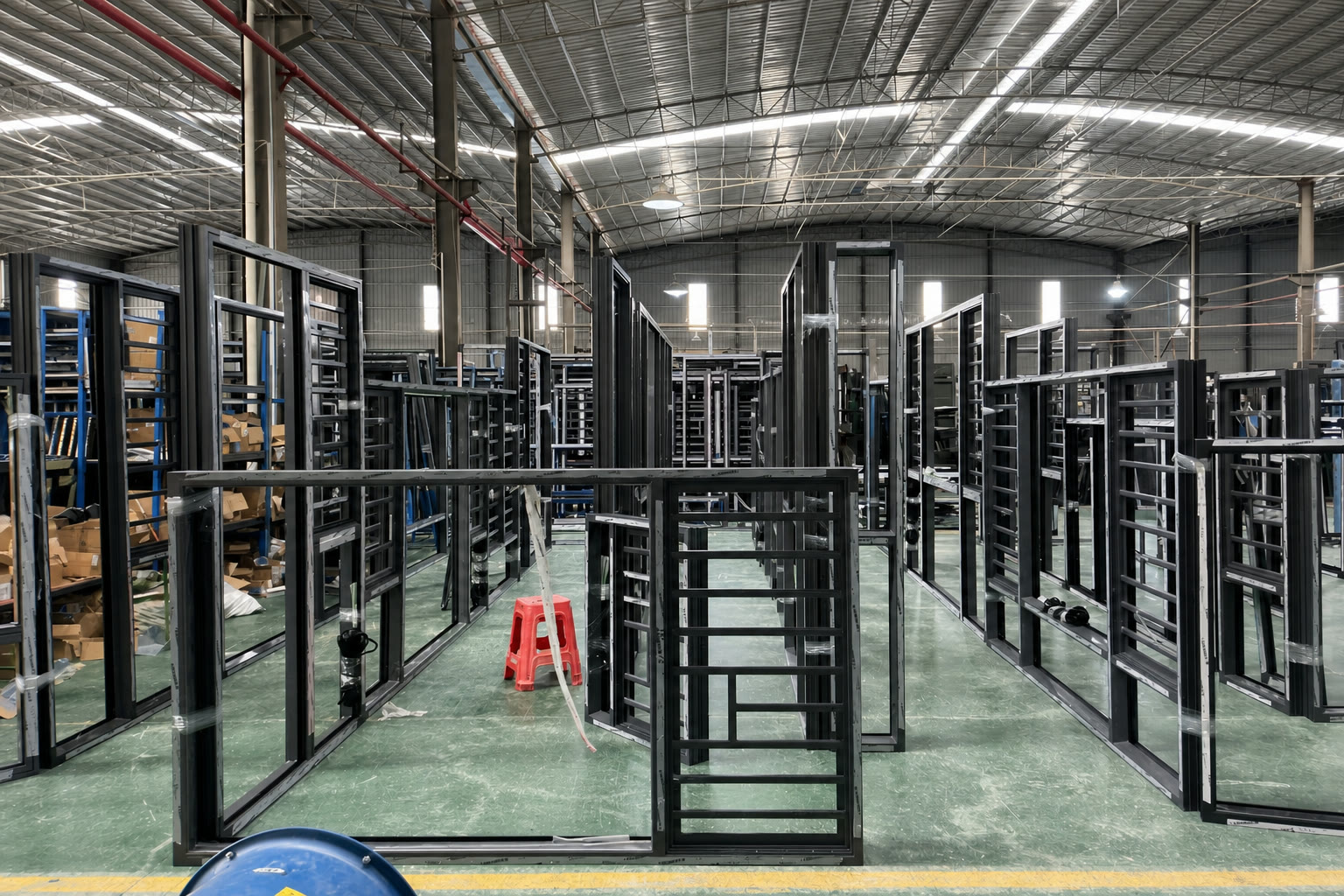
A supplier comparison should include what is produced, assembled and checked on the factory floor.
How should a supplier drawing-review habit and unresolved size, opening or glass-weight questions be checked?
The drawing review process tells you how the supplier will behave after the deposit. A serious team will mark missing sizes, unclear opening direction, large-panel concerns, glass weight questions and packing needs before production.
If the supplier only replies with a fast price and no questions, the early experience may feel easy, but the hidden decisions still exist. Those decisions often return later as changes, delays or mismatched expectations.
Quotation review example: deciding where five folding-door panels will stack (preliminary budget; anonymised).
This anonymous YULUX budget covered one folding door measuring 4,300 × 2,100 mm, with five panels preferred. Two existing-door photographs retained with the quotation show dark glazed frames, an exterior terrace and the connection between the interior and exterior. The dimensions and panel preference come from the enquiry record and quotation; they were not measured from the photographs.
Five panels leave decisions to make — Black powder coating and clear glazing were proposed, but the stacking side and opening direction were still awaiting confirmation. The drawings need to show where the panels stack, which way the door opens and the final hardware arrangement. The budget did not treat any particular stacking arrangement as agreed.
For a similar replacement enquiry, existing-site photographs can help identify space to retain, objects beside the door to avoid and a preferred stacking position. Record those requirements in dimensions and an opening diagram. Photographs provide context but do not replace a site measurement.
Compare the selections and exclusions together — The quotation provisionally specified 6 mm clear toughened safety glass. The final safety-glass specification remained subject to review against the applicable project requirements; the quoted description was not a completed compliance assessment. The exact black colour reference and gloss level were also pending, as was the final hardware.
Insect screens were excluded from this budget. Any screen requirement would need to be discussed alongside the door rather than assumed to be included. The document placed production drawings after written order confirmation. Site measurement, installation and local engineering were outside the default scope unless expressly included.
These details give a buyer concrete items to compare against another offer: the same dimensions, panel arrangement, glass, finish, screens and site-work scope. The photographs show the existing door, and the available record remains at the budget stage. It does not establish that YULUX completed the replacement or installation.
For your enquiry: Send the existing opening dimensions and photographs with your preferred stacking side and opening direction. Ask each supplier to return an opening diagram and to mark glass, colour, gloss, hardware, screens and site work as confirmed, excluded or still to review.
Quotation review example: 26 lines, 28 items and a 10 mm question (preliminary budget; anonymised).
One anonymous YULUX quotation brought sliding windows, tilt-and-turn windows, fixed glazing, heavy-duty sliding doors, hinged doors with upper opening windows and motorised roller-shutter combinations into a single schedule. It contained 26 quotation lines covering 28 items. Roller shutters included within window combinations were not counted as additional standalone items.
Keep the configuration beside each opening — The different opening types appeared as separate items. Each could be checked by its reference, dimensions, quantity and operating arrangement rather than being reduced to one average square-metre price. For a window-and-shutter combination, the inclusion of the shutter also matters when comparing counts and scope.
The two-panel sliding-window item proposed 5 + 15 + 5 Low-E double glazing, a concealed two-point lock, sliding rollers and an insect screen. The inward tilt-and-turn item proposed 5 + 20 + 5 Low-E double glazing, concealed tilt-and-turn hardware, multi-point locking and an insect screen. These were quotation specifications, with the final glass build-up subject to project confirmation. The final RAL colour was pending as well.
Those configuration descriptions do not establish tested thermal or acoustic ratings. The commercial scope also needed a separate comparison: export packing was included, while site installation, local works, international freight, duties, taxes and clearance were excluded.
Leave conflicting dimensions visible until they are resolved — Opening A16 recorded section widths of 3,880 mm and 2,480 mm alongside an overall width of 6,350 mm. The original enquiry drawings retain the corresponding inconsistent overall and section annotations at A16 and A27, and the quotation references those original drawings.
Using the quotation’s millimetre dimensions, 3,880 + 2,480 = 6,360 mm: a 10 mm difference from the stated 6,350 mm overall width. The quotation explicitly left the final joined widths pending confirmation. It does not establish which width is correct or whether a joint allowance explains the difference.
The overall width, section widths and joining arrangement need to be reconciled before they become manufacturing instructions. At this stage the quotation is a review record with visible questions, not evidence of production, delivery or completed installation.
For your enquiry: Compare every offer against the same drawing revision and opening marks. Keep differences in dimensions, glass, hardware, finish, accessories and exclusions in a written clarification list, and request a revised quotation and drawing when an answer changes the scope.
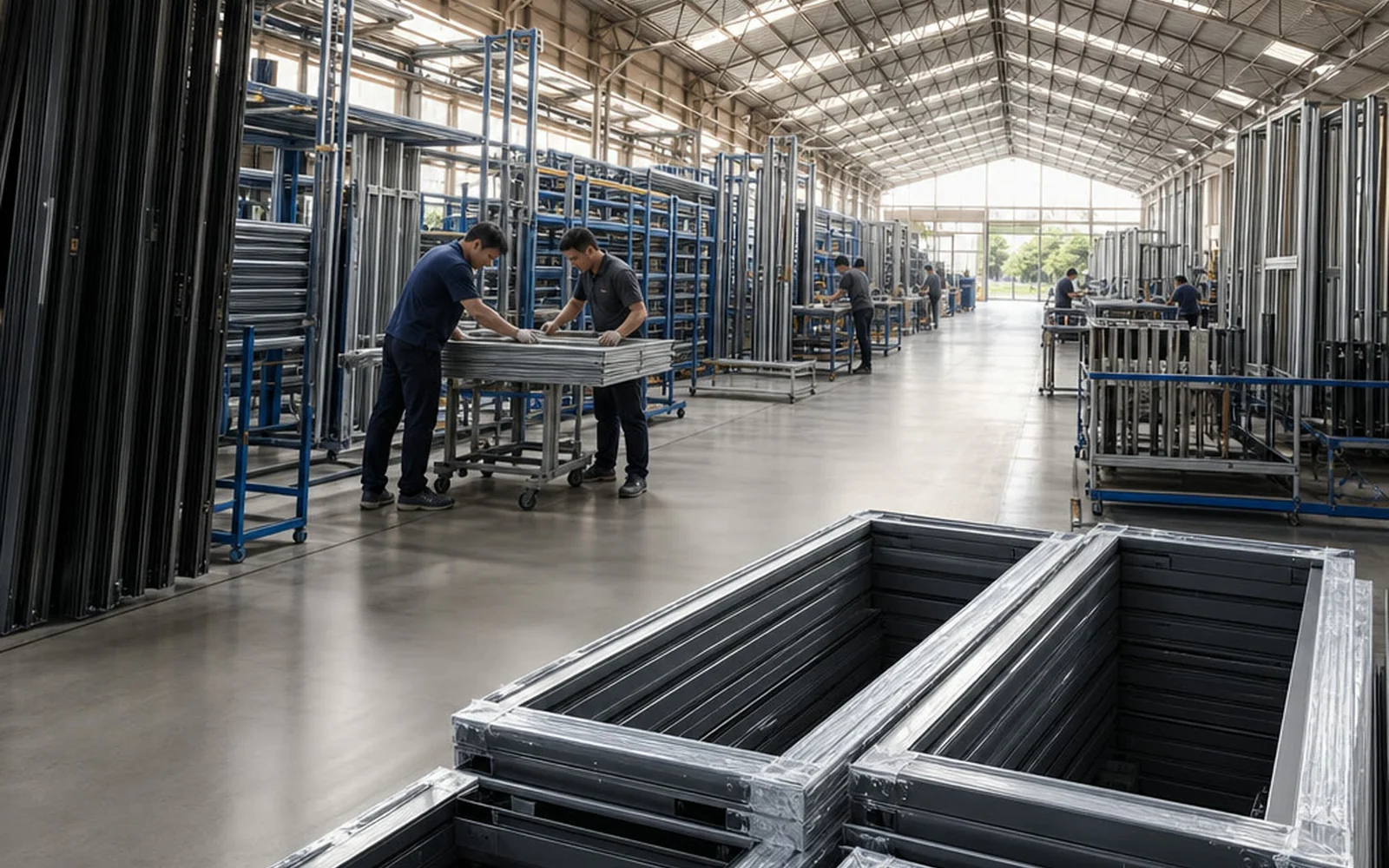
Ask how dimensions, hardware, glass, drainage and operation are checked before packing.
Which packaging controls and opening-label or loading records should be assessed before placing an order?
International window orders need more than finished frames. Ask how frames are protected, how glass corners are separated, how accessories are packed, how labels match the schedule and whether loading photos can be provided.
Packing is not decoration. It affects whether the buyer, builder or warehouse can receive, identify and move the order without confusion. This is especially important for mixed-size villa packages and large sliding doors.
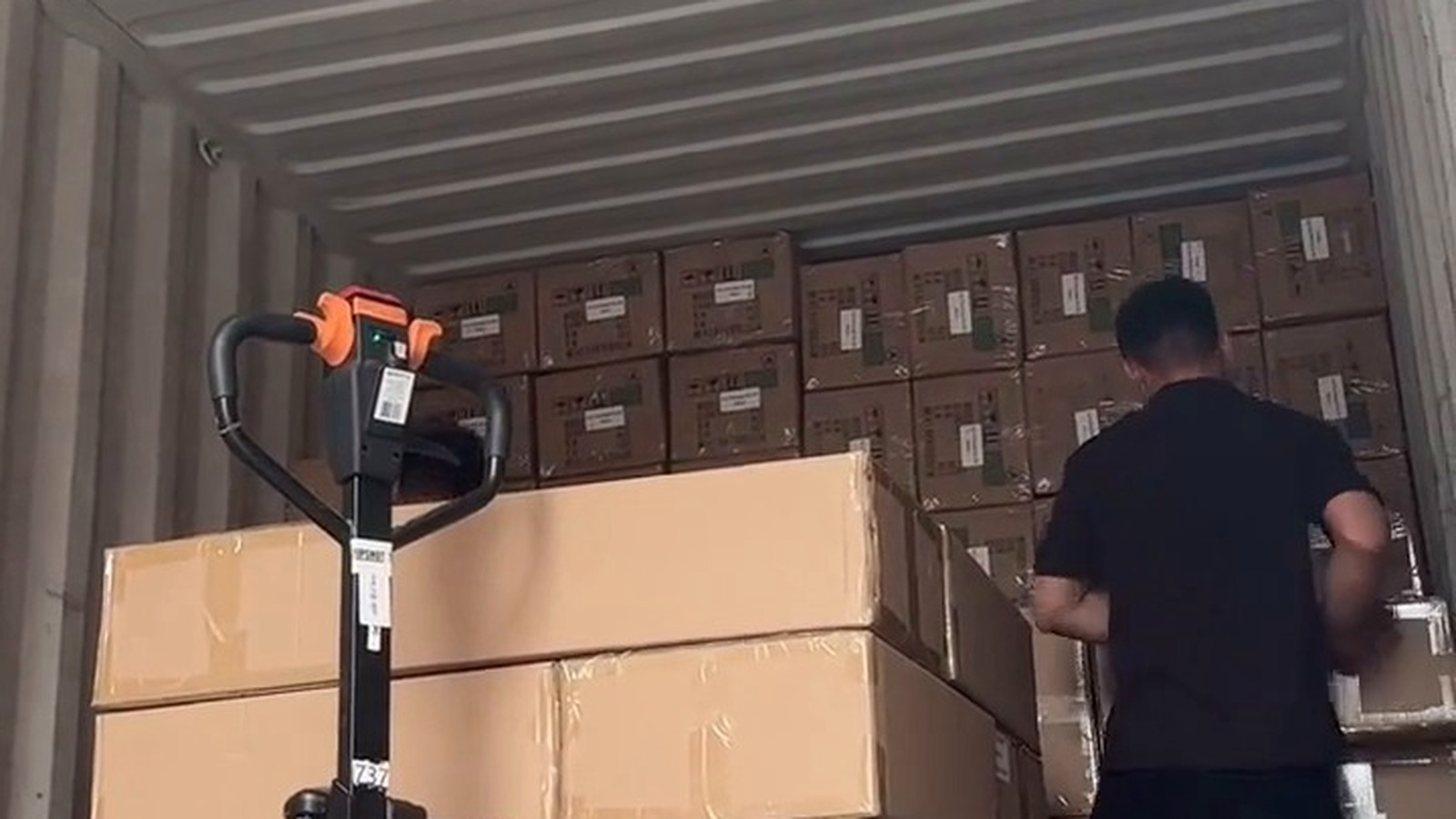
Quote quality also depends on whether packing, labels, accessories and loading records are clearly defined.
5. Judge communication by questions, not speed alone
Fast replies are useful, but the quality of the questions matters more. A supplier who asks about project country, drawings, glass, hardware, finish and packing is usually trying to protect the quote scope. A supplier who never asks may be quoting from assumptions.
Compare the price and how well the supplier helps you turn an unclear project into a clear order package.
Worked example: normalising two supplier quotes before you decide
The five existing sections above explain what to compare. This section shows how a comparison actually gets filled in, using one opening where two suppliers describe the same window in different words. Identifiers below are illustrative only.
The starting point
Both suppliers received the same RFQ package for a villa project: one marked drawing set (Revision C), a window schedule with handed openings noted, and a stated glass target. Their reply to the same schedule line is captured side by side, without any price comparison at this stage — the point is to make the scope readable first.
| Item | Supplier A wording | Supplier B wording | Buyer action |
|---|---|---|---|
| Frame series | “Thermal break aluminium, 1.4 mm” | “Premium thermal system” | Ask both to state series name, frame depth and wall thickness in writing |
| Glass | “Double glazed, Low-E” | “Double glazed, tempered” | Request build-up: pane thicknesses, cavity, Low-E position, spacer type |
| Toughening | Not mentioned | “Safety glass” | Ask which panes and at what height need toughened or laminated |
| Hardware | “Quality hardware” | “Italian brand handles” | Ask for brand, series and a spare-parts line |
| Screens | “Retractable screen option” | Not mentioned | Confirm per-opening: included, optional, or excluded |
| Packing | “Export packing” | “Wooden crates” | Ask about frame protection, glass separation, label matching and loading photos |
| Trade term | Not stated | “FOB, packing excluded” | Write the term against every quote before any further comparison |
The one scope difference worth chasing
The most useful row is not the frame or the hardware — both still have to be pinned down in writing before anything is approved. It is toughening and glass build-up, because that single line changes the product, not just the number. Supplier A's “Low-E double glazed” and Supplier B's “tempered double glazed” can be different units entirely: a Low-E unit is a coating choice, while toughening is a safety treatment, and a unit may have one, both or neither. If one supplier toughens only the low-level panes and the other treats the whole order, the comparison is no longer about the same window.
This is why the clarification list matters more than the price sheet at this stage. The goal of the first pass is to strip out the wording difference, not to rank anyone. Frame series, hardware and packing are not deferred: they belong on the same clarification list and have to be written down before a quote can be compared as like for like or approved for order.
The clarification to send
A single short message to both suppliers, tied to the drawing revision, closes most of the gap:
- Confirm the frame series name, depth and wall thickness against Revision C.
- State the full glass build-up for the scheduled line: pane thicknesses, cavity, Low-E position, spacer, and whether argon is filled.
- Confirm which panes are toughened or laminated, and whether the choice follows a local requirement or the supplier's default.
- Confirm whether the screen is included, optional or excluded on this opening.
- Confirm the trade term and what packing includes.
- Confirm whether the answer changes if the drawing revision changes.
Tie every reply to the revision number. If a quote can only be answered against “the drawing we saw”, that is itself information: it means the scope is not yet tied to a controlled document, and the window schedule guide is the place to fix that before anything else moves.
Open versus confirmed
Run a comparison sheet with a status column, so nobody has to remember what was still unresolved:
- Open — both quotes describe the line differently and neither has confirmed a number or a build-up.
- Clarification sent — the written question is tied to the drawing revision and a reply is pending.
- Confirmed — the supplier has answered in writing against the same revision and the answer is now the working scope.
In the worked case: frame series stays open until both name a series; glass build-up moves to clarification sent; screen and packing lines move to confirmed once both state included or excluded. Only when every scheduled line is either confirmed or explicitly excluded can a meaningful comparison begin — and by then, the remaining gap is usually genuine product or service difference, not a wording trick. If a supplier stops replying once real questions are asked, that is a useful result in itself.
For the down-the-line items this example touches, the packing checklist covers what to fix in writing, the hardware and spare-parts records covers the hardware line, and the sample order checklist is the practical route to confirming a build-up before a full run. Where a comparison rests on whether two quotes were written against the same fixed specification, the published guidance on comparing window quotations describes the like-for-like, line-by-line approach to comparing quotations.
Next step
Take one opening from your own schedule — ideally the one with the largest glass area or the most unusual handing — and fill the table above with two real quotes against the same drawing revision. Send the six clarification questions to both suppliers before you look at the total. Anything still marked open at that point is your decision-maker, not the headline figure.
Let YULUX review your drawings before pricing.
Send us your window schedule, floor plans or photos. We review opening sizes, system direction, glass, hardware, finish and packing scope before quoting.