
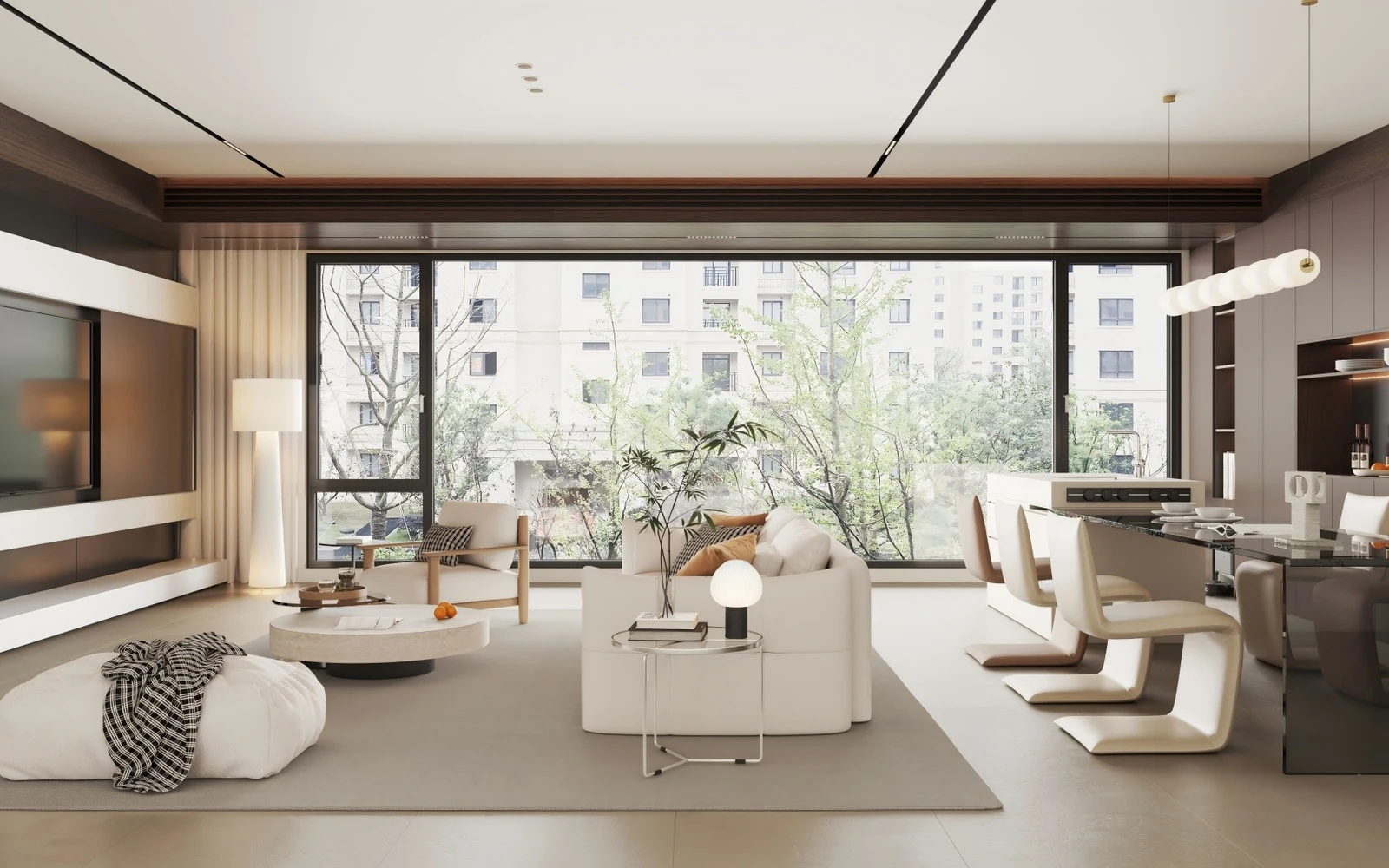
Should a villa project use casement or tilt-turn aluminium windows?
Casement windows provide a familiar side-hung opening and can suit bedrooms, living spaces and combinations with fixed glazing. Tilt-turn windows add a second inward-tilting ventilation position, which can support controlled ventilation and interior cleaning where the room layout permits. The choice also affects screens, curtains, handles, hardware complexity, sash size, wall reveals and interior clearance. Neither style is automatically better for every villa. Compare room use, ventilation habits, cleaning access, child or fall-safety strategy, weather exposure, desired sightlines, glass weight and maintenance expectations. Final size, hardware, restrictors, screens and performance direction must be reviewed against the actual opening and local project requirements.
Buyer decision boundary
Neither operation is automatically suitable for every room; safety, clearance, screens, exposure and sash weight require actual-opening review.
Evidence to request or retain
- Room schedule.
- Opening sketches.
- Hardware scope.
- Local safety questions.
Example input: Room comparison
- Room
- Ventilation
- Cleaning
- Clearance
- Screen
- Sash
- Safety
- Reviewer
What this guide does not confirm
Not safety, weather, capacity or suitability certification.
Casement and tilt-turn comparison
| Decision | Casement | Tilt-turn |
|---|---|---|
| Ventilation | Full side-hung opening | Tilt ventilation plus turn opening |
| Interior clearance | Depends on inward or outward design | Requires inward sash clearance |
| Screens | Project-specific position | Must suit both operating modes |
How do casement and tilt-turn opening modes differ?
Casement and tilt-turn windows can both work in villa projects, but they solve different room problems. Casement windows are familiar, clean and practical for many bedrooms, bathrooms, stair areas and mixed fixed-window elevations. Tilt-turn windows add inward opening and tilt ventilation, which can help with controlled airflow and cleaning.
The right question is not which product is better in general. It is which room needs which operation.
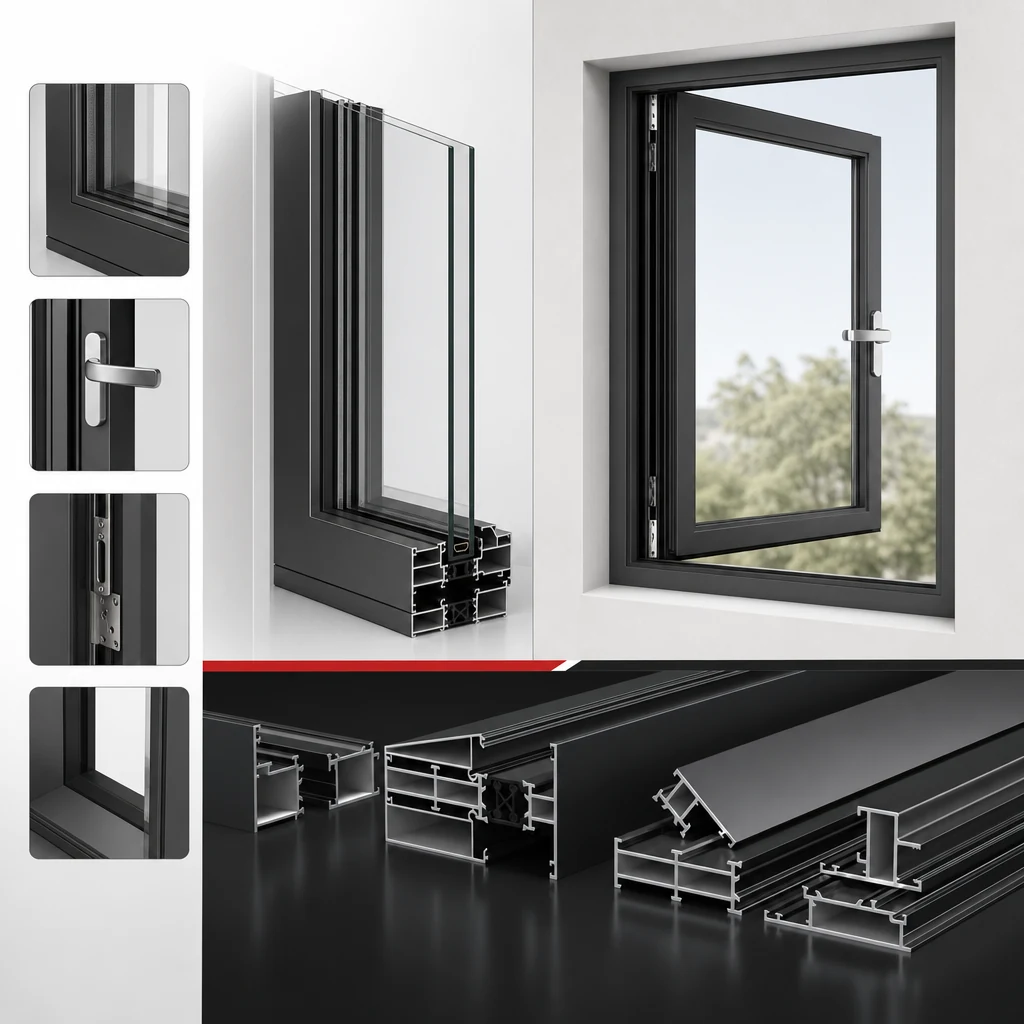
Casement windows provide a direct opening path and should be checked for wind, screen and exterior clearance.
Which room and ventilation needs favour each option?
A casement window gives direct ventilation when opened. A tilt-turn window can tilt inward for controlled daily ventilation and swing inward for cleaning access. This matters for upper floors, apartments, narrow exterior access or rooms where users want ventilation without a fully open sash.
For a villa schedule, it may be practical to mix both types. Public rooms may use larger fixed and opening combinations, while bedrooms or studies use the operation that fits daily habits.
How do screens, curtains and cleaning access affect selection?
Tilt-turn hardware is more complex than basic casement hardware. Sash size, glass weight, handle height and opening direction should be checked before quotation. Casement windows also need hinge, friction stay, lock point and restrictor review when the sash becomes large.
If the quote does not show hardware direction, ask before comparing price. The cheapest line may be cheaper because it assumes a simpler hardware path.
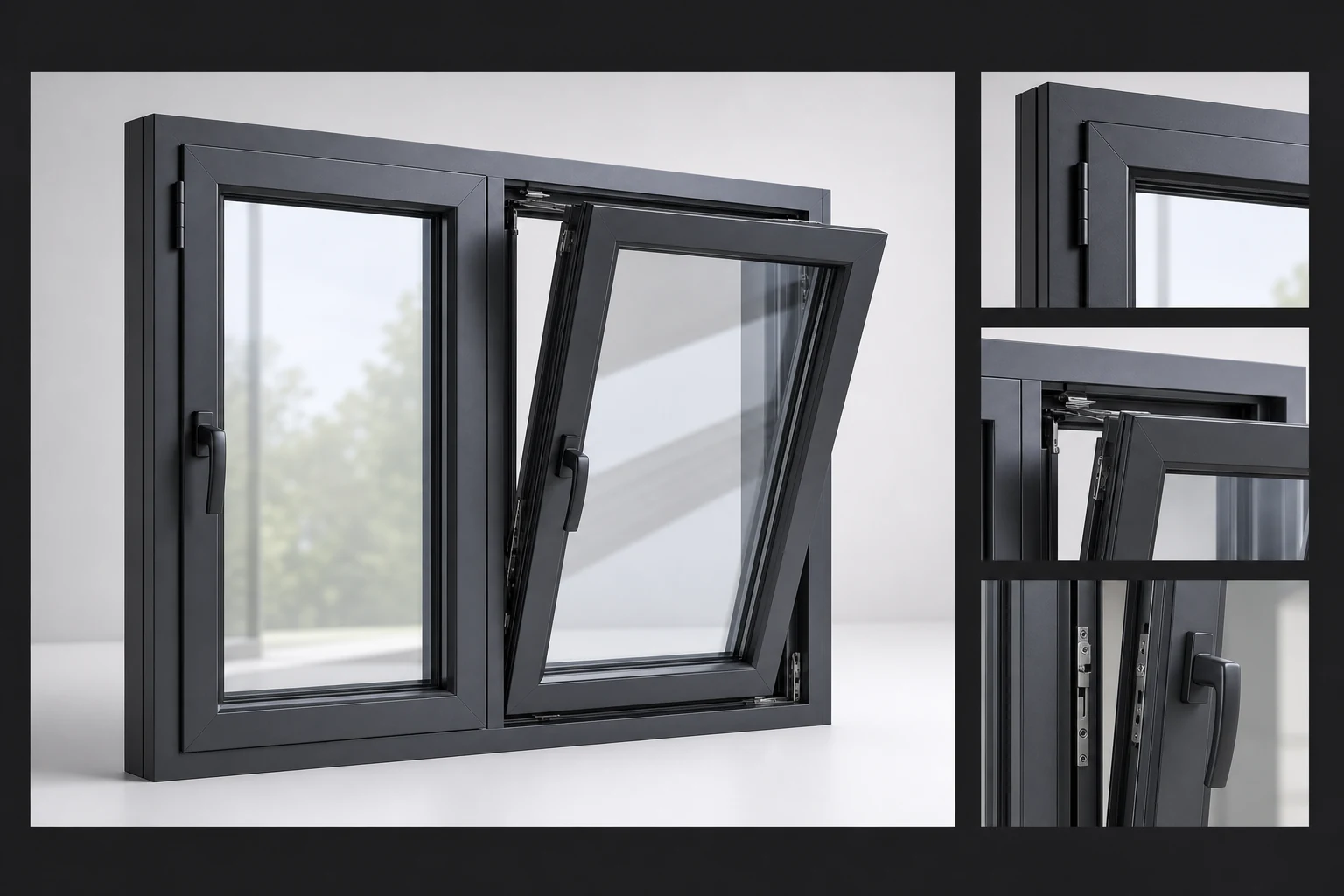
Tilt ventilation and full inward opening solve different room-use and cleaning requirements.
Which size, glass and hardware limits require review?
Window operation interacts with screens, curtains, furniture and wall depth. Inward opening can affect curtain position and interior clearance. Outward opening can affect exterior access and wind exposure. Screens may be fixed, retractable, internal or system-specific.
Before finalizing the window type, mark which rooms need screens, privacy, easy cleaning or restricted opening. These small daily-use details influence buyer satisfaction.
5. Send a room-by-room note for better pricing
For a better quote, send the window schedule with room names, floor level, size, opening direction, glass target, screen need and any safety notes. The supplier can then suggest where casement is enough and where tilt-turn may be worth reviewing.
This avoids upgrading every opening blindly while still keeping important rooms comfortable and practical.
Let YULUX review your drawings before pricing.
Send us your window schedule, floor plans or photos. We review opening sizes, system direction, glass, hardware, finish and packing scope before quoting.